

Best Jazz Samples for Hip-Hop, Lo-Fi, and Beyond
The best jazz samples carry harmonic depth, swing, and analog warmth that programmed elements can't touch—here's how to find them, flip them, and process them so they actually sit in your hip-hop, lo-fi, or modern mix.

Get Co-Producer and Arcade with unlimited access to premium, royalty-free samples and instruments. Plus, unlock Portal, Thermal, and Movement.
Try it freeBest Jazz Samples for Hip-Hop, Lo-Fi, and Beyond
Jazz samples built hip-hop, shaped lo-fi, and continue to give producers harmonic depth and rhythmic feel that programmed elements can't touch. This breakdown covers what makes a jazz sample work, where to find them, how to flip them without losing the feel, and the processing techniques that help them sit in modern mixes.
What makes a jazz sample work in modern production?
A jazz sample works when it carries four qualities: harmonic richness, rhythmic feel, tonal warmth, and textural interest. These separate a sample you'll actually use from one that sits in a folder forever.
- Harmonic richness: Extended chords like 7ths, 9ths, and 13ths give jazz its signature color. These voicings create movement that keeps a loop interesting across multiple bars.
- Rhythmic feel: Swing, microtiming, and ghost notes inject life that quantized programming can't replicate. This human timing is what makes jazz samples feel alive.
- Tonal warmth: Tape saturation and natural room ambience from vintage recordings give jazz samples their analog character. This warmth helps samples sit in a mix without fighting for space.
- Textural interest: Instrument bleed, vinyl crackle, and subtle imperfections add dimension. These artifacts make samples feel lived-in rather than sterile.
When you're auditioning samples, listen for these qualities first. A sample with strong harmony but weak texture might need processing. A sample with great feel but muddy tone might need EQ work.
Where to find jazz samples that fit your track
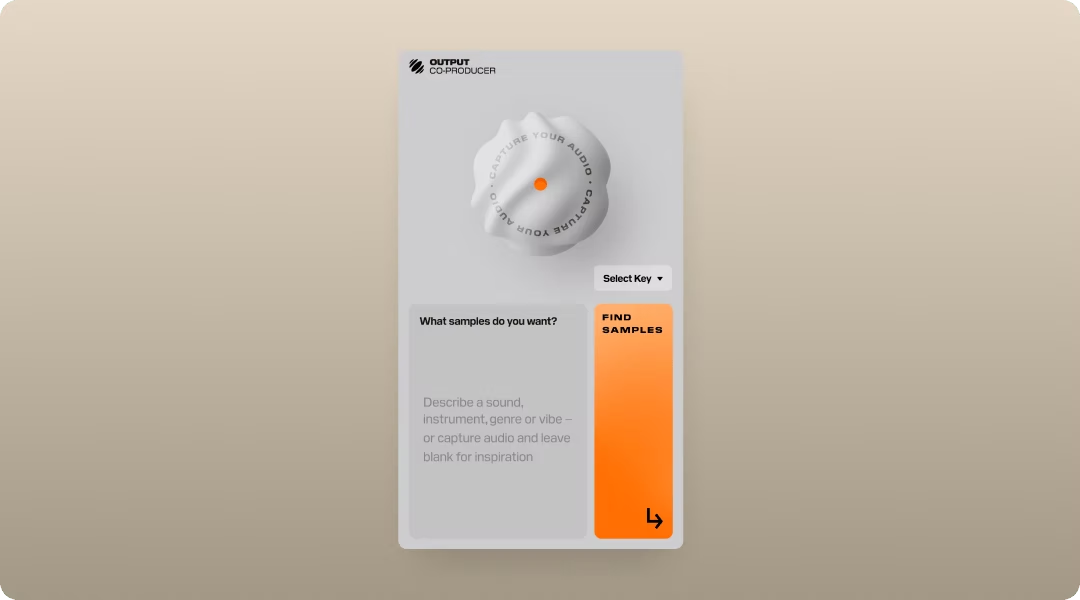
The fastest way to find jazz samples is to let your track do the searching. Co-Producer listens to your DAW session and surfaces samples that fit harmonically and rhythmically. You drag and drop directly into your project without leaving your workflow.
- Session-aware discovery: Co-Producer analyzes your track's harmony, rhythm, and tempo, then recommends samples that fit. No keyword guessing or endless scrolling. You can capture either 4 or 8 bars of audio—8 bars is recommended when available since it gives Co-Producer more harmonic and rhythmic content to analyze for better matches.
- Unlimited access: No credits to ration. You can audition as many samples as you need without worrying about running out.
- Re-imagine variations: Transform any sample into one-of-a-kind versions so your beats don't sound like everyone else's.
Splice and Loopmasters offer curated jazz sample packs with BPM and key tags. These work well for building a library over time, but you're still doing the matching work yourself.
- Splice: Credit-based system with a massive catalog. Good for targeted searches when you know exactly what you want.
- Loopmasters: Genre-focused packs from established producers. Strong jazz and blues collections with consistent quality.
Tracklib takes a different approach, offering clearable samples from original recordings. You get unique source material, but commercial releases require licensing fees.
Co-Producer is available alongside Arcade and Output's FX plugins through Output One.
Jazz drum loops and how to use them
Jazz drums carry the genre's signature feel. The ride cymbal pattern, brush technique, ghost notes, and loose hi-hat work create a pocket that programmed drums struggle to match.
- Ride pattern: The defining pulse of jazz drumming. Varying dynamics on the ride create forward motion without overwhelming the mix.
- Brush work: Soft, textured snare sound used in ballads and quieter passages. Adds intimacy that sticks can't replicate.
- Ghost notes: Quiet snare hits between main beats. These are what make a loop feel human.
- Swing feel: Notes pushed or pulled off the grid. This microtiming separates jazz from straight-eighth genres.
When layering jazz drum loops with programmed elements, keep the organic feel intact. A boom-bap kick can sit underneath a jazz loop without fighting it if you match the swing percentage.
Arcade lets you chop jazz drum loops into playable kits. You trigger individual hits while keeping the original feel. Load a loop, auto-chop it, and you've got a custom kit in seconds.
- Auto-chop: Drag in any loop and Arcade slices it into playable samples mapped across your MIDI controller.
- Key and tempo lock: Everything stays in sync with your session automatically. Samples automatically sync to your DAW's BPM, though you can switch to original BPM if you prefer the sample's native tempo feel. Set your Session Key in Arcade and all samples automatically transpose to match—essential when layering jazz loops that were recorded in different keys.
- Modifiers: Reshape playback with Repeater, Resequence, and Playhead controls for real-time manipulation. Beyond chopping, Arcade's black keys (C2-C4) act as Modifier keys for real-time manipulation—hold them while playing samples to add performative effects like repeats, resequencing, or playhead jumps.
XLN Audio Addictive Drums offers programmed jazz kits when you need more control over individual elements.
- Realistic articulations: Multiple velocity layers and round-robin samples for natural variation.
- Built-in mixing: Individual mic channels let you blend close mics with room sound.
- MIDI grooves: Pre-recorded patterns from session drummers you can drag into your arrangement.
How jazz samples shaped hip-hop production
The jazz-hip-hop connection runs deep. A Tribe Called Quest built entire albums around jazz loops. Pete Rock turned obscure Blue Note sessions into boom-bap anthems. J Dilla, Madlib, and Nujabes pushed the tradition forward.
Jazz works in hip-hop for three reasons:
- Harmonic sophistication: Jazz chord extensions give beats melodic complexity without cluttering the vocal space. A Cmaj9 carries more emotional weight than a basic triad.
- Rhythmic flexibility: Swing and rubato passages can be chopped to create unique pocket. The timing imperfections become features.
- Emotional depth: Minor 7ths and modal harmony evoke mood and atmosphere. Jazz samples bring feeling that synth patches often lack.
This tradition continues today. Producers still dig for jazz samples, but the tools have changed. Instead of spending hours in record stores hunting old school samples, you can surface samples that fit your track in seconds.
Flipping jazz samples without losing the feel
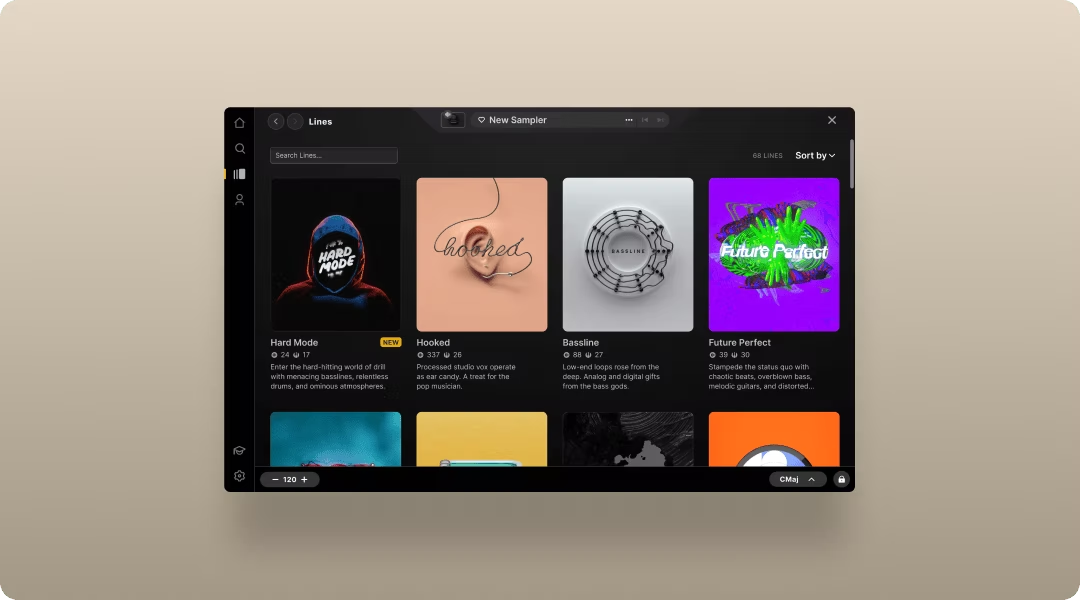
Flipping means taking a sample and making it your own. The technical approach you choose determines whether your flip sounds intentional or accidental.
- Chopping: Cutting samples at transients or musical phrases, then rearranging to create new patterns. Works best when you want to reorder the harmonic content.
- Time-stretching: Adjusting tempo without changing pitch. Works best on rhythmically consistent material. Rubato passages will sound unnatural when stretched.
- Re-harmonizing: Changing the bass note to shift the harmonic context. A Dm7 sample becomes Fmaj9 when you add an F bass underneath—tools like Substance give you the low-end weight to make that re-harmonization hit.
Arcade's auto-chop feature turns jazz loops into playable instruments. You trigger individual slices via MIDI while the plugin handles key and tempo locking. For a deeper walkthrough, see how to use your own sounds in Arcade. Arcade's Playable Pitch feature lets you retune samples in real-time—if your jazz loop is in C Major and your track moves to F, you can transpose the sample on the fly by playing the corresponding pitch on your keyboard's lower octaves.
Serato Sample offers similar functionality with a focus on vinyl-style workflow.
- Pitch and time independent: Change tempo without affecting pitch, or vice versa.
- Pad mode: Trigger slices from your MIDI controller like a classic sampler.
- Key detection: Automatically identifies the sample's key for easier matching.
Ableton's native warping handles time-stretching directly in the arrangement view if you prefer working without additional plugins.
Jazz harmony basics for sample-based producers
Understanding jazz harmony helps you layer original elements over samples. You don't need a theory degree, but knowing a few concepts makes your work faster.
- Extended chords: 7ths, 9ths, 11ths, and 13ths add color and tension. A basic triad sounds flat compared to a chord with extensions.
- ii-V-I progression: The most common jazz cadence. In C major, that's Dm7 to G7 to Cmaj7. This progression creates strong harmonic motion.
- Voice leading: Smooth movement between chord tones. Guide tones move by step or stay in place rather than jumping around.
When you identify these elements in a sample, you can complement them with new parts. If your sample contains a ii-V-I, you know where the tension peaks and where it resolves. That knowledge informs where to place your bass notes and counter-melodies.
Processing jazz samples for lo-fi and modern contexts
Raw jazz samples rarely fit directly into a modern mix. Processing shapes them to sit alongside synthesizers, 808s, and contemporary production elements. If you're building lo-fi sample packs into your workflow, these techniques help jazz elements blend with dusty, textured aesthetics.
Thermal adds tape-style saturation and harmonic density to jazz samples. Its multi-stage distortion engine lets you dial in warmth without harshness.
- 15+ distortion types: From subtle tape warmth to aggressive digital clipping. Each type includes shape controls that let you dial in harmonic density, and an auto-gain feature keeps levels consistent as you experiment.
- XY macro control: Blend multiple parameters at once for fast sound shaping.
- Built-in FX: Compression, filtering, and width processing in one plugin.
RC-20 Retro Color from XLN Audio offers a different approach to lo-fi processing.
- Six effect modules: Noise, wobble, distortion, digital degradation, space, and magnetic tape emulation.
- Preset-driven workflow: Dial in vintage character quickly with genre-specific starting points.
- Mix control: Blend processed and dry signals for subtle or extreme results.
Portal transforms samples into granular textures when you want something more experimental. It breaks audio into grains and re-synthesizes them in real time.
- Scale-locked pitch: Pitch modulation stays musical rather than random. You can quantize grain pitch to specific scales, intervals, or chords—set it to a Major Chord and pitch shifts will only hit the root, third, fifth, and octave.
- Tempo-synced grain delay: Rhythmic textures that lock to your session.
- XY performance control: Shape sounds in real time during playback.
Movement adds rhythmic modulation that syncs to your session tempo. Use it for sidechain-style pumping, filter sweeps, or evolving textures.
Thermal, Portal, and Movement are all available together through Output One.
Arranging jazz-influenced tracks
Jazz arrangement concepts translate directly to modern production. Understanding the structure gives your tracks more depth.
- Head: The main melodic theme, typically stated at the beginning and end. In a beat, this might be your main sample or hook.
- Solo sections: Extended instrumental passages. These can become breaks or bridge sections in your arrangement.
- Verse/chorus hybrid: Combining jazz structure with pop song forms. The head becomes your chorus, and variations become verses.
When arranging jazz-influenced tracks, think about density. Jazz breathes. Leaving space between elements lets each part speak.
If your sample is harmonically dense, keep your added elements simple. If your sample is sparse, you have room to layer.
Building a jazz sample library
A well-organized library saves hours of searching. Folder structure, tagging, and format choices all affect how quickly you find what you need.
- Folder structure: Organize by instrument (keys, horns like saxophone, drums, bass), then by mood or tempo. This hierarchy matches how most producers think when searching.
- Tagging: Include key, BPM, and mood descriptors. Most DAWs can read metadata tags, making searches faster.
- Stems vs. loops: Stems offer more flexibility for mixing. Full loops are faster to audition but harder to customize.
When exporting your own loops, leave headroom and include tail. A sample that cuts off abruptly sounds unnatural.
Start making jazz-influenced beats today
The workflow is straightforward: find samples that fit your track, manipulate them to make them your own, then process with FX for character and depth.
Co-Producer handles the discovery phase, surfacing jazz samples that match your session's key, tempo, and harmonic context. Arcade turns those samples into playable instruments you can chop, flip, and reshape. Portal, Thermal, and Movement shape the final sound.
All of these tools are available together through Output One.
FAQ
Are jazz samples from Output royalty-free for commercial releases?
Yes. All samples in Co-Producer and Arcade are royalty-free and cleared for commercial use. You can release music made with these samples without additional licensing.
What BPM range works best for jazz-hop and lo-fi beats?
Most jazz-hop and lo-fi producers work between 70 and 100 BPM. This mid-tempo range lets the swing feel breathe while still providing enough energy for head-nodding grooves.
Can I use jazz samples from vinyl records in commercial releases?
Samples from copyrighted recordings require clearance before commercial release. Platforms like Tracklib offer clearable samples with licensing options, but the fees vary based on usage.
Which DAW works best for chopping and flipping jazz samples?
Any major DAW handles sample-based production well. Ableton Live and FL Studio are popular choices because of their warping and slicing tools, but Logic, Pro Tools, and others work just as effectively.
Output One includes Co-Producer, Arcade, Thermal, Portal, and Movement—everything you need to chop, texture, and transform jazz into hip-hop, lo-fi, and beyond. Get them all in one subscription (plus all FX expansions) and try the full workflow together.
Try it free