Hip Hop Drum Kits for Beginners: What Producers Use and Where to Find Them
The best hip hop drum kits for beginners are cohesive, royalty-free WAV kits that load in any DAW. Here's what producers actually use, where to find legit kits, and how to shape lo-fi, break, crisp and trap drums.

Get Co-Producer and Arcade with unlimited access to premium, royalty-free samples and instruments. Plus, unlock Portal, Thermal, and Movement.
Try it freeThe best hip hop drum kits for beginners give you kicks, snares, hats, percussion and 808s that already sit together, in royalty-free WAV files that drag into any DAW. Start with one cohesive kit from a legit source. Learn what each sound does in the groove. Then build your own kit from the hits you keep reaching for. Below are the main kit styles: dusty breaks, lo-fi, crisp, breakbeat and trap. You'll also see where producers actually get their drums, and which tools turn a folder of samples into an instrument.
What are the best hip hop drum kits for beginners?
The best beginner kits are cohesive, royalty-free and easy to load. A good starter kit gives you kicks, snares, hats and percussion that complement each other, so your time goes into programming grooves instead of fixing samples that clash. Clear royalty-free terms mean you're free to release the beat. Plain WAV files open in any DAW.
Hip hop is beat-first. The instrumental has to stand on its own before a vocal arrives, so the drums need to hit hard and still leave room in the mix. Plenty of beginners grab a snare from one pack and a kick from another, then wonder why nothing glues. But a kit built as a set solves that from day one.
Here's what separates a useful beginner kit from a folder of random sounds:
- Cohesive sound palette: Every element was made to work together, so your kicks and snares already complement each other
- Royalty-free licensing: Clear terms that let you release beats commercially without chasing clearances
- Universal format: Standard WAV files that load in FL Studio, Ableton Live, Logic Pro, Pro Tools and any other DAW
- Mix-ready sounds: Samples processed to sit together without heavy EQ or compression
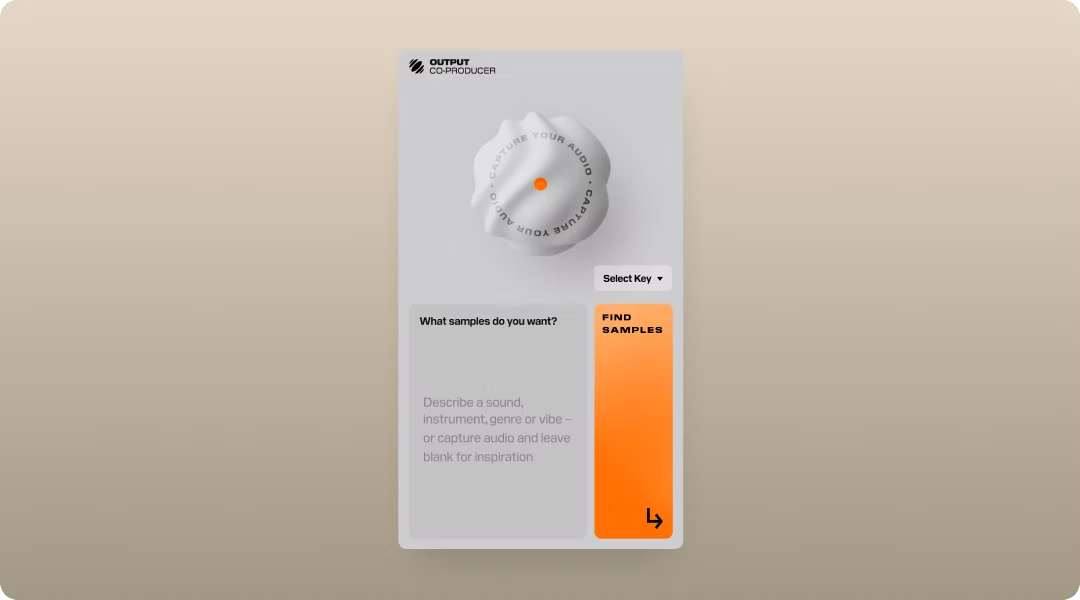
Co-Producer shortcuts the dig. Put it on your master bus and it listens to your session, then suggests royalty-free samples that fit your track's rhythm and harmony. Every result plays back synced to your session's key and tempo, and you drag the keepers straight into your DAW. The Re-imagine feature uses ethically trained generative AI to turn a sample into new, one-of-a-kind royalty-free versions, so your snare doesn't sound like everyone else's. Co-Producer and Arcade both come with Output One, along with Portal, Thermal, Movement and Creator.
What hip hop drum kits do producers use?
Most producers don't stick to one branded kit. They build their own from one-shots and breaks collected over years, and those sounds come from a few kinds of sources.
Classic drum machines sit at the root. The Roland TR-808 gave trap its booming low end, while the gritty 12-bit SP-1200 and Akai's MPC samplers shaped the swing and crunch of boom bap. Kits sampled from those machines, or designed to sound like them, still anchor most producers' folders.
Producer and boutique kits come next. The Drum Broker has sold hip hop drums, breaks and producer kits since 2011, including Beat Butcha's Filth series and Marco Polo's Crate Classics. Splice runs on credits: each sample costs one credit, every sample is royalty-free and cleared for commercial use, and you keep what you download. Cymatics has a free downloads section with hip hop and trap packs, including its BANG hip hop drum kit, and each pack comes with a license worth reading.
So skip the leaked kits passed around forums and Discord servers. Some hold sounds lifted from paid packs or commercial records, and nobody in that chain has the right to license them to you. Buy from the source, use a subscription with clear terms, or make your own. Our Lil Tony drum kit guide shows how to build an artist-style kit from royalty-free sounds.
Every drum sound a beginner hip hop kit should include
A complete hip hop drum kit covers the full frequency range. Each element plays a specific role in the groove, and knowing those roles helps you build patterns that actually knock.
Kicks anchor the low end and set the pocket. You want punchy acoustic kicks for boom bap styles and tuned 808 kicks with sustain for trap and modern hip hop. And everything else sits on top of the kick.
Snares and claps carry the backbeat, usually on beats 2 and 4. Layering a snare with a clap adds width and snap without muddying the mix. Keep several snare options in your kit, because the snare decides the feel of the whole beat.
Hi-hats push the rhythm forward. Closed hats keep the pulse while open hats add accents. And velocity differences between hits give you the human feel that separates a groove from a stiff, robotic pattern.
Percussion fills the space between the main hits. Shakers, rimshots and one-shot percs add texture and movement without fighting for attention. They usually sit low in the mix. But they're what makes a beat sound finished.
808s work as both bass and rhythm in modern hip hop. A tuned 808 with a long tail carries the low end and the melody at once. Getting your 808 to sit with your kick is one of the most important skills in hip hop production.
Look for kits with velocity layers and several variations of each sound. They stop the machine-gun effect, where the same sample repeats identically and sounds fake. Arcade turns one-shots into playable instruments you perform and record into your session, and it builds kits from your own samples too. Set Arcade's Session Key and its sounds lock to your song's key, which keeps tuned elements like 808s in pitch with the track.
Lo-fi and soulhop drum kits for beginners
Lo-fi hip hop drums sound warm, dusty and saturated. The style calls back to vinyl records and tape machines, with soft transients and rolled-off highs. And the sound traces back to the sample-based tradition of producers like J Dilla and Madlib, who built beats from chopped records and kept the imperfections in.
The lo-fi sound comes from a handful of processing moves:
- Vinyl texture: Subtle crackle and hiss under the drums to mimic worn records
- Tape saturation: Soft clipping that rounds off harsh transients and adds harmonic warmth
- Swing and groove: Off-grid timing that feels like an MPC and sounds human
- Reduced high end: Low-pass filtering that keeps everything mellow
Soulhop, the soul-sampling side of lo-fi, leans even harder on warm, dusty drums. Search "soul hop" on sample stores and you'll find kits built around that sound, and the lo-fi drum samples page collects hits that already sit in the pocket. Pre-processed kits save you from degrading clean samples yourself.
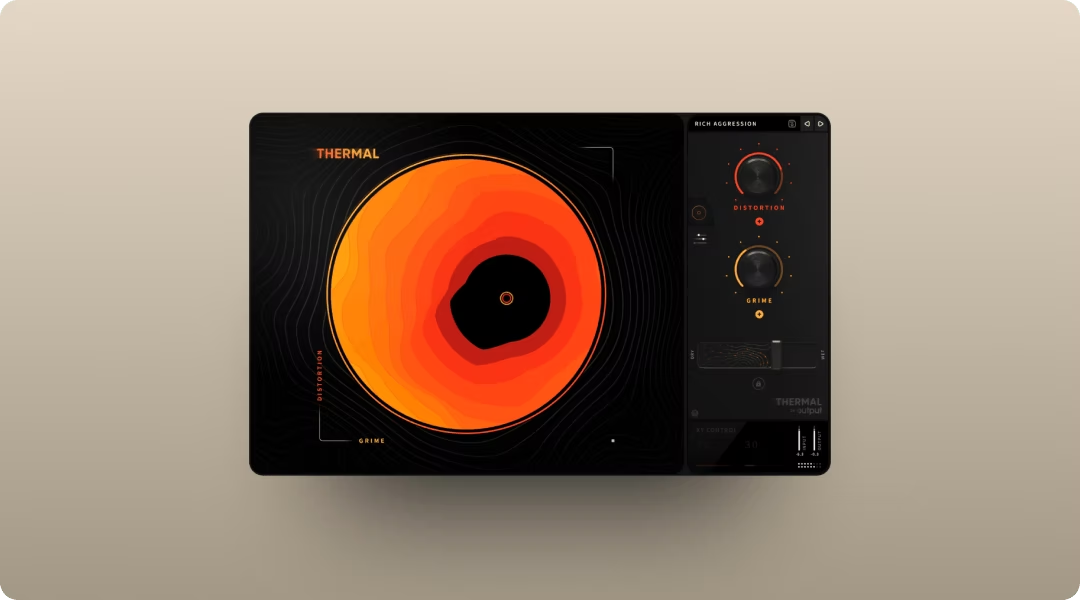
If a clean kit needs character, Thermal adds it. The multi-stage distortion engine runs three stages, and each one has its own crossover points, so you crunch the top of a snare and leave its body alone. AUTO gain compensation keeps your level steady as you push the drive. And an envelope follower ties the feedback amount to how hard each hit lands, which gives lo-fi drums a breathing, pumping feel.
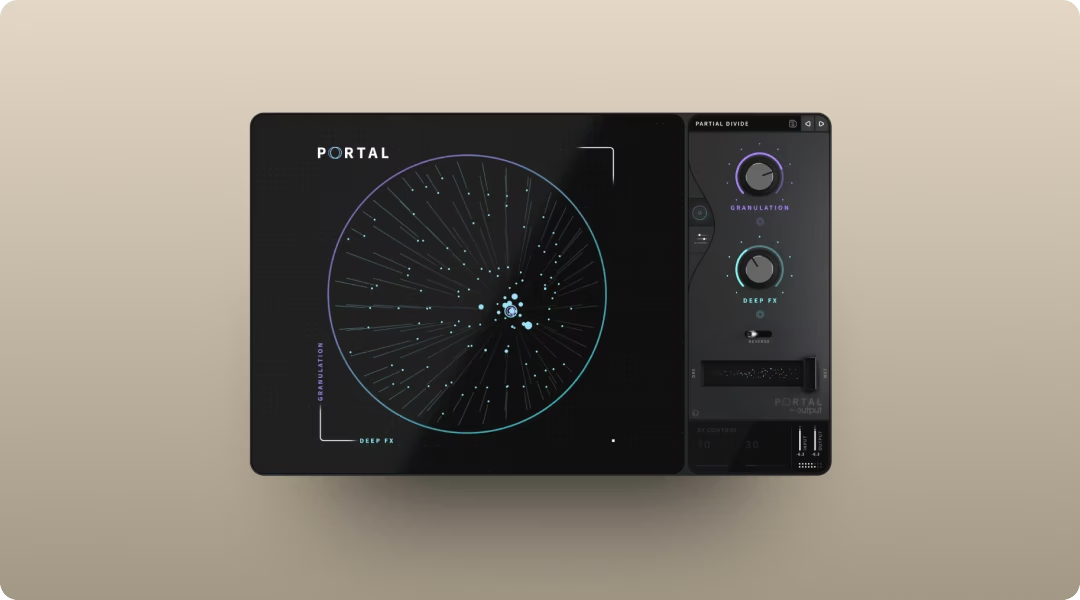
Portal takes the other route. Granular processing breaks a drum hit into tiny grains and rebuilds it, so a snare smears into a long, textured tail. Use it on lo-fi transitions and atmospheric breaks where the drums drift and decay.
Dusty break drum kits for beginners
Break kits differ from one-shot collections because they give you full drum loops to slice, chop and rearrange. That workflow goes straight back to hip hop's roots, when producers built whole beats from a few seconds of a funk or soul record.
A drum break is the part of a song where the drums play alone, and producers have sampled breakbeat moments since hip hop began. Run a break as-is, or cut it at the transients and rebuild new patterns from the pieces. The ghost notes and fills between the main hits carry its swing, so keep them. Then time-stretch the break to your project tempo without changing its pitch.
The payoff is that you inherit the groove of the original recording. The drummer's timing, the room sound and the small interactions between hits all come along for the ride.
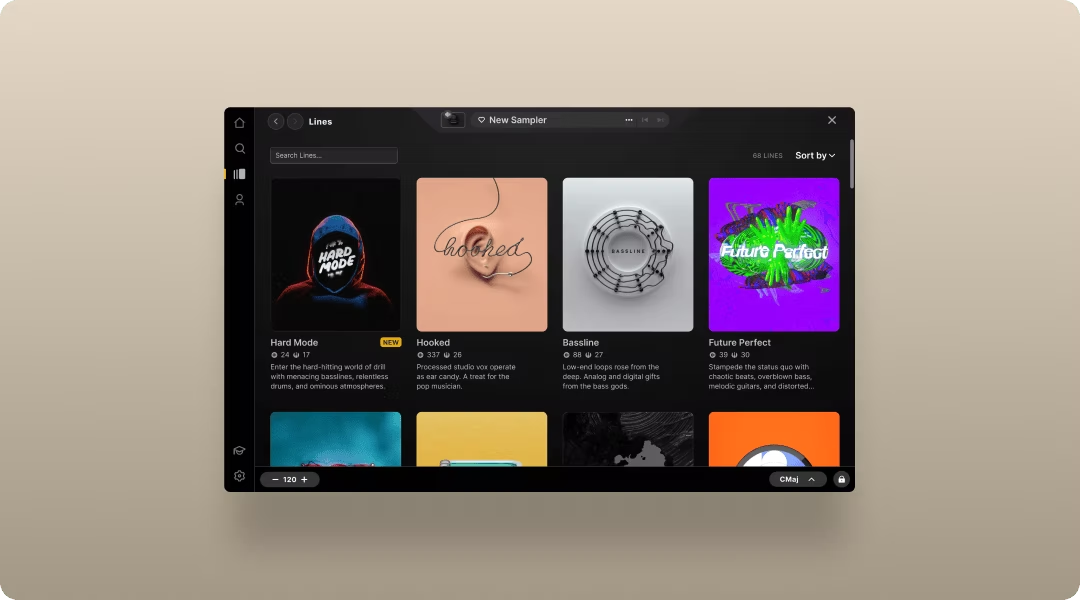
Arcade's Sampler Generator turns any sample you've brought into Arcade into a playable kit. Pick a break, hit Generate Sampler, and Arcade slices it across the whole keyboard. Four slice algorithms change how each slice gets cut, and FX presets reshape the kit before you save it. From there you play the chops on a MIDI controller instead of dragging slices around a timeline. You also build kits from your own audio or from Arcade's library.
Serato Sample is another strong chopping tool. The Find Samples feature analyzes the waveform and drops cue points on the strongest moments. It also shifts a sample's key without touching its tempo, and Serato Sample runs as a VST, AU or AAX plugin in the major DAWs.
Crisp drum kits for beginners
Crisp kits deliver the polished sound of radio-ready hip hop and R&B-leaning beats. Expect punchy transients, clear highs and processing that cuts through without extra work. Think Drake-style records, or anything headed for playlists where the mix has to translate across earbuds, car speakers and club systems.
Strong transients hit hard without clipping. Snares and hats with real snap stay audible in dense arrangements. And because the sounds start clean, layers stack without building mud in the low mids.
But polished kits still benefit from motion. Movement adds rhythmic motion and evolving grooves that lock to tempo, which brings static drum loops to life without drawing in automation by hand.
XO from XLN Audio scans your one-shot library and maps it visually by sonic similarity. Find a snare close to the one you love, or swap a whole set in one click. XO ships with more than 8,700 one-shots and 240-plus editable beat presets, plus a sequencer with groove templates.
Breakbeat drum kits for beginners
Classic breakbeat kits focus on iconic loops and their variations. You get full, arrangement-ready breaks that have defined hip hop for decades, often in several versions: with fills, without fills, at different tempos and with different processing.
The difference from a dusty break kit is focus. A breakbeat kit treats the loops as arrangement building blocks. You layer variations across a song, bring in fills for transitions and drop to stripped-down versions for verses. So you get the energy of a classic break without spending an afternoon chopping.
Co-Producer will analyze four or eight bars of your track and suggest loops that fit its rhythm, synced to your tempo. For more ways to chop and flip loops, see our guide to the best drum loops for beat making.
Battery 4 from Native Instruments builds kits from color-coded cells and adds on-board effects such as transient shaping, tape saturation, lo-fi and convolution reverb. And its time stretching helps fit loops to your tempo.
Trap drum kits and trap drum samples for beginners
Trap drums define modern hip hop with tuned 808s, rapid hi-hat rolls and hard snares. The sound came out of Atlanta and now runs through streaming playlists everywhere. Learn trap drum programming and a lot of subgenres open up.
Trap sounds sparse but heavy. Beats use few elements at full presence. The 808 carries the bass and much of the melody, while the hi-hats supply the rhythmic detail through rolls and variations.
The essentials of a trap drum kit:
- 808 bass: Tuned sub-bass with long sustain and pitch glides
- Hi-hat rolls: Sixteenth and triplet patterns with velocity changes for movement
- Hard snares and claps: Layered for impact, usually on beats 2 and 4
- Space: Room left for the 808 and the vocal to lead the mix
Trap production starts with sound selection. The right 808 and snare pairing defines the beat before you program a single pattern. So time spent auditioning sounds saves hours later.
Co-Producer helps you find 808s and trap drums that fit your session. Describe what you want and it searches the library for you. Output's guide suggests a structure of descriptor, genre, vibe and instrument, so a search like "dark trap 808 with long sustain" gets closer than "808".
Thermal helps 808s cut through on small speakers, where pure sub-bass disappears. With its stage processing, you add upper harmonics that read on earbuds and laptops while the fundamental keeps its weight on bigger systems. If you want free trap drum samples to start with, Cymatics' free downloads include a trap starter pack.
Do hip hop drum kits work with any DAW?
Yes. Hip hop drum kits ship as standard audio files, most often organized folders of WAVs you drag onto tracks or load into your DAW's sampler. No special installation required.
- WAV format: The standard every DAW reads without conversion
- Drag and drop: Pull samples from folders straight onto your timeline or into a sampler
- Built-in samplers: Load one-shots into FL Studio's FPC, Ableton's Drum Rack, Logic's Drum Machine Designer or any third-party sampler
- No installer: Most kits are folders, not proprietary formats
Arcade installs as an instrument plugin in AAX, AU, VST and VST3 formats, so it runs in FL Studio, Ableton Live, Logic Pro and Pro Tools. A standalone app lets you preview sounds and build kits outside your DAW. Co-Producer loads as an effect on your master bus, where it can hear the whole session.
Output One bundles Co-Producer for finding samples that fit, Arcade for playing and chopping them, and Portal, Thermal and Movement for shaping any audio. Creator, a desktop app for building songs from sound, comes with it too. Want the full picture of the plugins behind the genre? Read our roundup of the best hip hop VST plugins.
Hip hop drum kit FAQ
Where can I find hip hop drum kits?
Get them from the people who made them or from a service with clear terms. Boutique stores like The Drum Broker sell producer kits, Splice sells individual royalty-free samples on credits, labels like Cymatics give away free packs, and Arcade and Co-Producer include royalty-free libraries.
Are free hip hop drum kits safe to use?
Free kits released by the company or producer who made them come with a license you can read. If you plan to release the beat, check that license first. Leaked kits shared without permission come with no rights at all.
Should beginners start with drum loops or one-shots?
Use both. Loops show you how a groove breathes, and one-shots teach you to program your own. Many producers chop a loop, keep the best hits and fold them into their own kit.
Black Friday early access is open. Save on the FX + Instruments Bundle, individual plugins like Portal, Output Kontakt Instruments and every expansion.
Shop sale →