

Best Cinematic VSTs for Composers and Producers in 2026
From orchestral libraries to granular FX and sample-based workflows, here's a breakdown of the best VSTs for cinematic music in 2026—what they actually do, how they fit together, and how to build a scoring palette that serves the picture without burying your voice.

Get Co-Producer and Arcade with unlimited access to premium, royalty-free samples and instruments. Plus, unlock Portal, Thermal, and Movement.
Try it freeBest Cinematic VSTs for Composers and Producers in 2026
Cinematic scoring demands VSTs that respond to your performance, fill a stereo field without fighting dialogue, and move from whisper to full power without falling apart. This breakdown covers orchestral instruments, hybrid synths, granular FX, and sample-based workflows that actually serve the picture.
What makes a VST sound cinematic
A cinematic VST is any virtual instrument or effect that helps you create music for film, TV, trailers, or games. This means tools built for emotional impact, wide dynamic range, and sounds that support visual storytelling.
The difference between a cinematic plugin and a general-purpose one comes down to responsiveness. You need instruments that move from quiet to loud without compression flattening the performance. You need articulations that respond to how hard you play. You need sounds that fill a stereo field without fighting the dialogue.
- Dynamic range: The ability to shift from barely audible to full power without artifacts
- Articulation depth: Legato, staccato, tremolo, and other techniques mapped to keyswitches
- Expression control: Mod wheel and CC data that shape the sound in real time
- Stereo imaging: Wide sound fields that translate to surround and Atmos mixes
When you're scoring to picture, these qualities determine whether your music supports the story or sits awkwardly on top of it.
Cinematic VST instruments for orchestral scoring
Orchestral instruments form the foundation of most cinematic work. Strings carry emotion. Brass delivers power. Woodwinds add intimacy. Percussion punctuates action. The challenge is finding libraries that balance playability with depth.
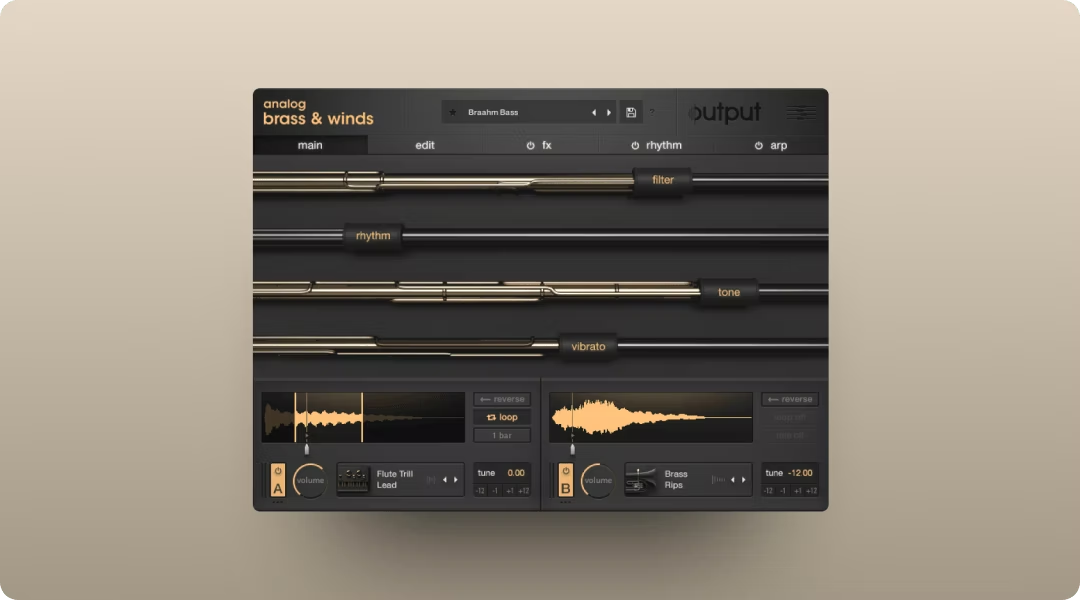
Output's Analog Brass & Winds takes a hybrid approach. It blends orchestral recordings with analog synth textures and tape processing. This works well when you need brass or woodwinds that sit somewhere between traditional and modern.
- Hybrid layering: Blend acoustic recordings with synth textures in a single patch
- Tape-processed character: Built-in analog warmth without additional processing
- Kontakt-based workflow: Familiar interface with keyswitch articulation control
Spitfire Audio's BBC Symphony Orchestra covers the full ensemble with multiple mic positions. CineSamples offers focused libraries like CineBrass that prioritize fast loading and playability. ProjectSAM's Symphobia series delivers pre-orchestrated textures for trailer-style cues.
For Spitfire BBC Symphony Orchestra: - Multiple mic positions: Close, tree, ambient, and outrigger options for placement control - Full ensemble coverage: Every orchestral section in one package - Professional-grade recordings:Captured at Maida Vale Studios with the BBC Symphony Orchestra
For CineBrass: - Fast loading times: Optimized patches that don't slow down your session - Playable legato: Smooth transitions between notes without complex programming - Multiple dynamic layers: Realistic response to velocity changes
Each instrument family serves distinct cinematic roles. Strings handle sustained pads and emotional swells. Brass delivers fanfares and tension. Choir adds ethereal texture or dramatic crescendos. Percussion provides impact and momentum.
Cinematic synth VSTs for pads, drones, and textures
Modern cinematic scoring relies heavily on hybrid sounds. Wavetable synthesis, granular textures, and modulation-heavy patches create tension and atmosphere that acoustic instruments can't provide alone.
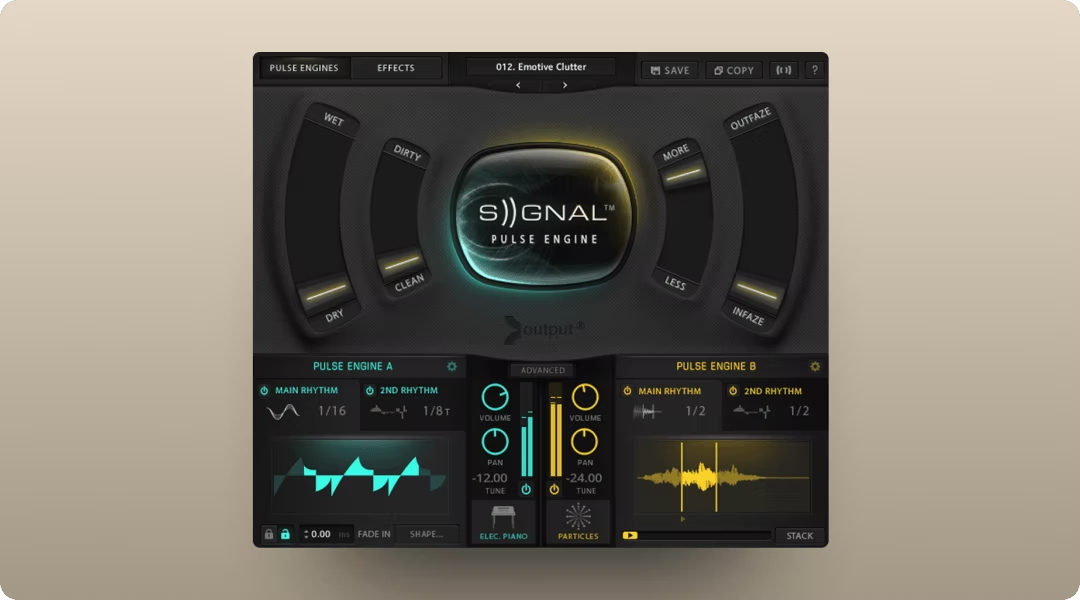
Output Signal combines analog-style synthesis with recorded live instruments. The hybrid architecture lets you blend synth oscillators with sampled strings or brass. This approach works when you need electronic textures that retain organic character.
- Hybrid sound sources: Combine synth oscillators with acoustic samples
- Macro controls: Shape complex sounds with simple knob movements
- Cinematic presets: Starting points designed for film and TV work
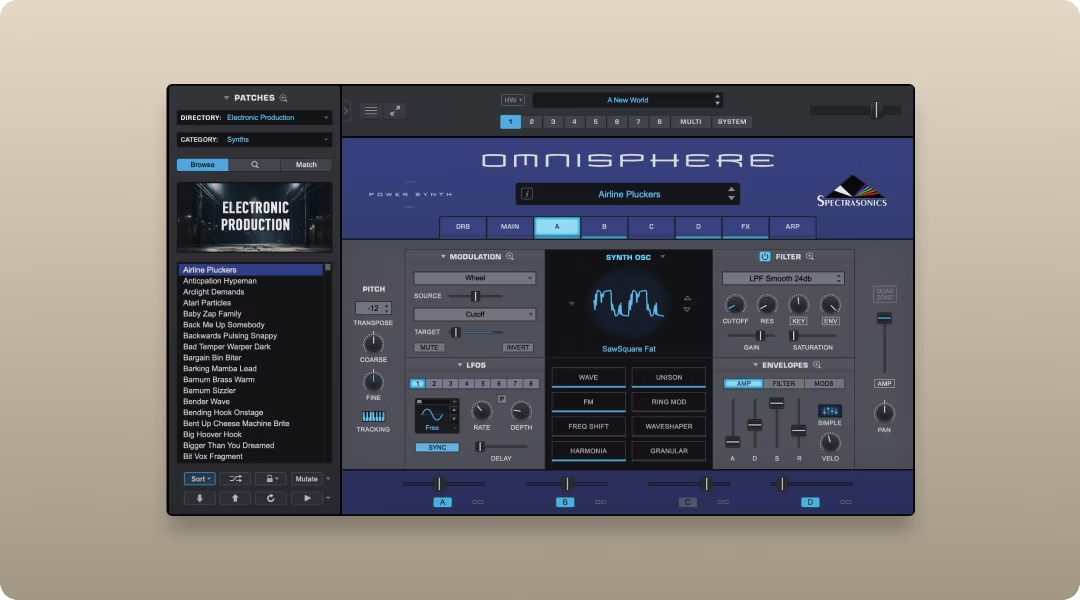
Spectrasonics Omnisphere remains a standard for cinematic synth work. Its library includes evolving pads, aggressive basses, and granular textures. Arturia Pigments offers a modern interface with wavetable, virtual analog, and sample-based synthesis. Vital provides a free option with wavetable capabilities that punch above its price.
For Omnisphere: - Massive sound library: Thousands of patches across every cinematic style - Granular and wavetable engines: Deep sound design without external tools - Hardware integration: Control patches with supported synthesizers
For Arturia Pigments: - Visual modulation: See exactly how your LFOs and envelopes shape the sound - Multiple synthesis types: Wavetable, virtual analog, sample, and granular in one plugin - CPU efficiency: Complex patches without session slowdown
Synth design for cinematic work focuses on movement. Static pads sound like presets. Pads with subtle filter sweeps, pitch drift, and amplitude modulation sound like scores.
Cinematic sound design VSTs for texture and motion
FX plugins transform source material into something new. In cinematic work, this means turning simple recordings into evolving textures that support picture.
Portal for granular texture
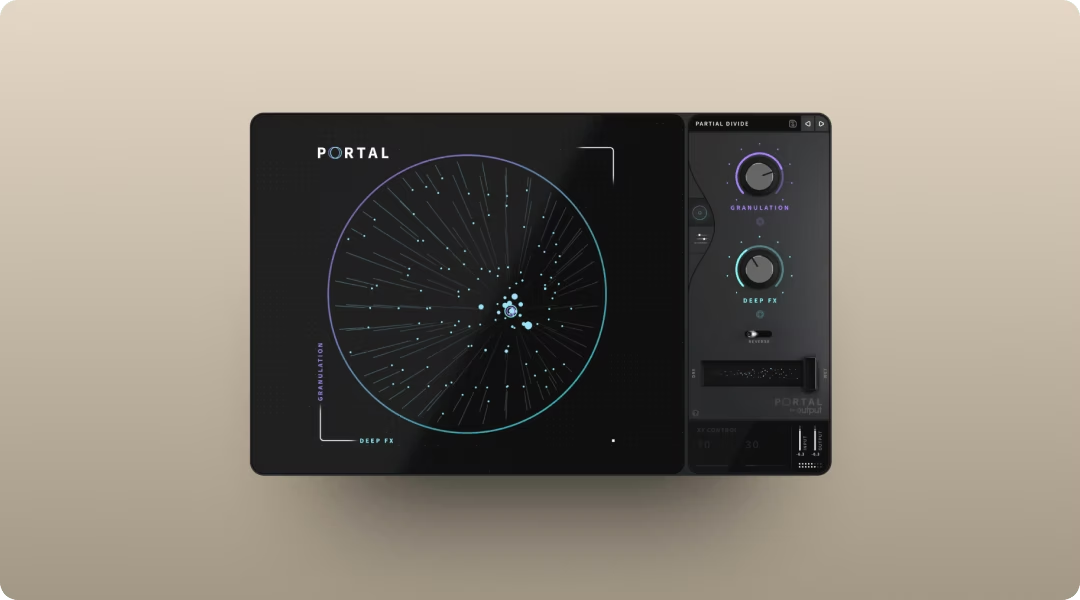
Output Portal breaks audio into tiny grains and rebuilds it in real time. This creates shimmer, smear, and spatial effects. A single string note becomes an ambient bed. A vocal phrase transforms into a reverse-style swell.
- Scale-locked pitch: Portal's Scale feature quantizes pitch shifts to musical intervals, chords, or scales—so even extreme granular manipulation stays harmonically coherent with your score
- Tempo-synced grain delay: Textures lock to your session tempo
- XY performance control: Shape the effect in real time while scoring
Portal works as an insert on any audio or instrument track. Beyond granular processing, Portal includes built-in effectslike reverb, delay, and filtering in the signal chain. It's available standalone or through Output One, which bundles it with Co-Producer, Arcade, Thermal, and Movement.
Movement for rhythmic motion
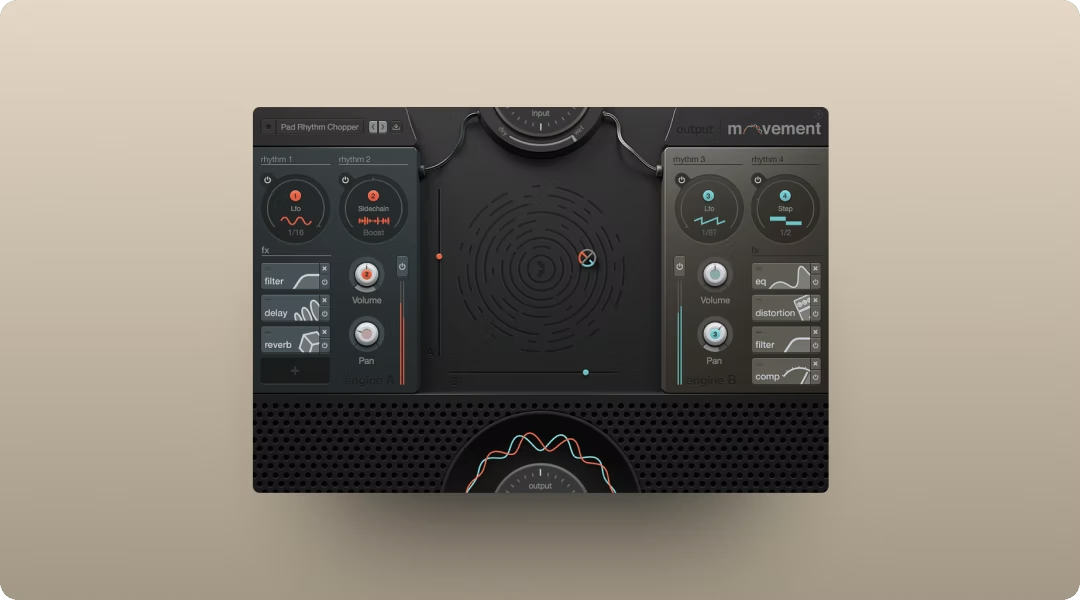
Output Movement adds tempo-synced pulse and animation to static sounds. Sidechain-style pumping, LFO-driven filter sweeps, and step-sequenced modulation turn flat textures into living elements.
- Four rhythm engines: LFO, step sequencer, sidechain, and Flux mode
- 152 modulatable parameters: Control nearly everything from a single interface
- XY performance pad: Real-time manipulation during scoring sessions
Movement turns a single sound into an arranged part. Instead of automating multiple parameters across your DAW, you shape the motion inside the plugin. Movement is also included in Output One.
Cinematic distortion and saturation VSTs for weight and grit
Controlled distortion adds analog weight and harmonic density to cinematic mixes. The key word is controlled. Random clipping destroys dynamics. Intentional saturation enhances them.
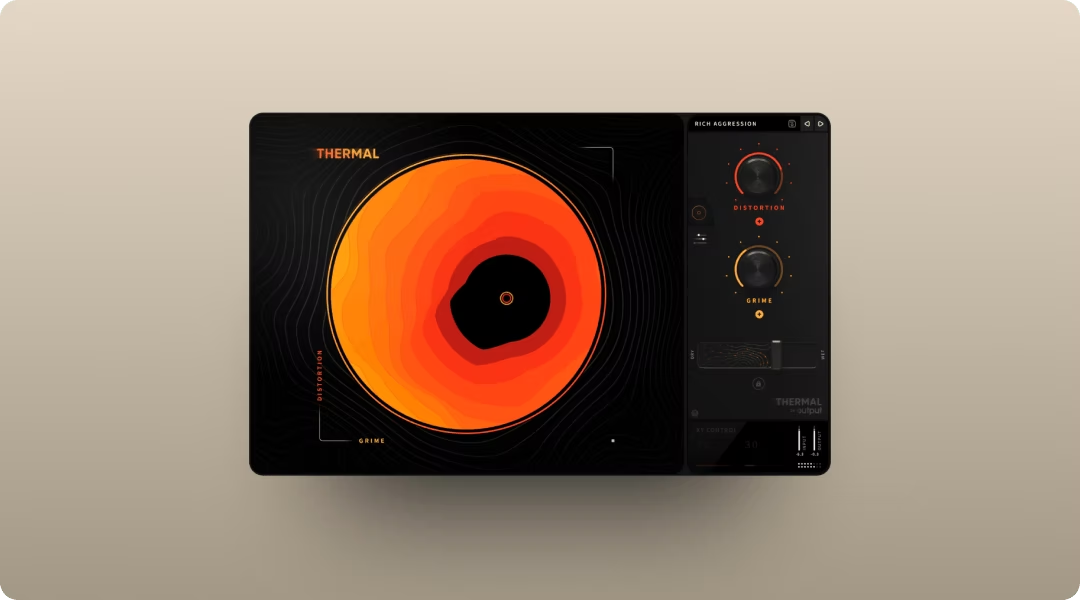
Output Thermal provides multi-stage distortion processing with over 15 distortion types. The multiband architecture lets you add grit to low-end impacts without muddying orchestral mids.
- Multiband processing: Target specific frequency ranges for saturation using Band Split controls, with Refilter options to remove unwanted harmonics from each stage's output
- XY macro control: A performance pad that controls two macro parameters simultaneously—the visualizer responds to active distortion stages, making it intuitive to find sweet spots between clean and crushed during scoring sessions
- 9 built-in effects: Shape the distorted signal without additional plugins
Thermal is available standalone or through Output One. The preset browser organizes starting points by category for quick access during sessions.
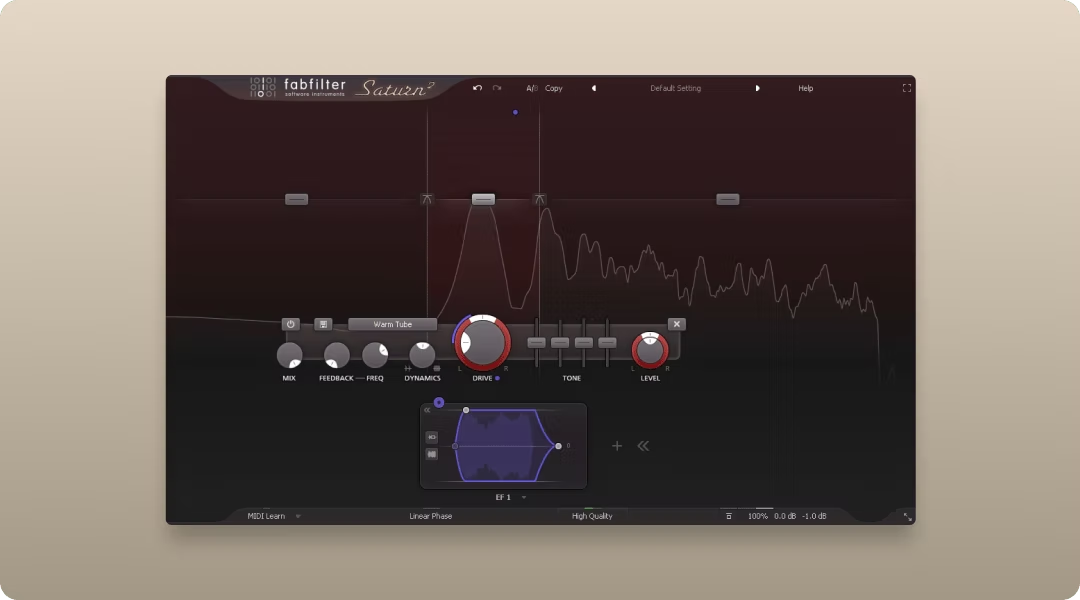
FabFilter Saturn 2 offers surgical multiband saturation with deep modulation. Soundtoys Decapitator delivers analog-modeled saturation with vintage character.
For FabFilter Saturn 2: - Per-band modulation: Animate saturation across frequency ranges - Linear-phase processing:Transparent multiband splitting for mastering - Extensive preset library: Starting points for every saturation style
For Soundtoys Decapitator: - Five analog models: Tube, tape, and transistor-style saturation - Punish button: Instant aggressive character for trailer-style cues - Simple interface: Fast results without deep menu diving
Distortion in cinematic contexts works best on specific elements. Parallel saturation on taiko hits adds presence. Subtle drive on brass creates aggression. Heavy distortion on risers delivers trailer intensity.
Sample-based VST workflows for cinematic composers
Sample-based tools speed up cinematic production when deadlines are tight. The challenge is finding cinematic samples that fit your cue without hours of browsing.
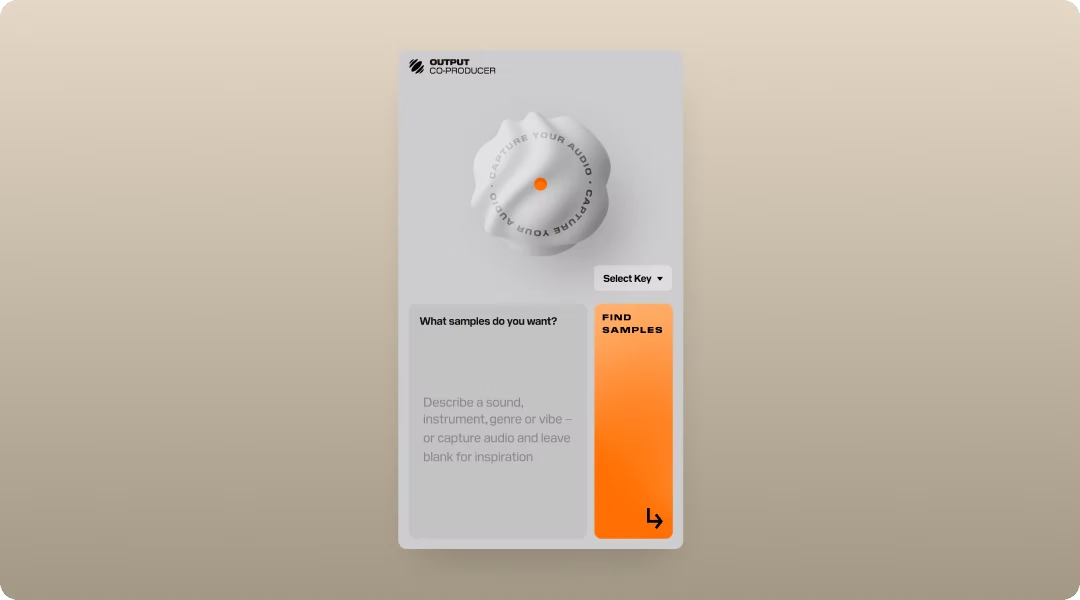
Output Co-Producer addresses this directly. It listens to your session and recommends samples that match your track's harmony, rhythm, and tempo. Co-Producer lives in your master track's FX insert, analyzing what you're building in real time.
- Session analysis: Capture 4 or 8 bars of your session audio, select your key, and Co-Producer returns complementary samples matched to your track's harmonic and rhythmic content
- Automatic sync: Samples match your project's key and tempo
- Re-imagine feature: Uses ethically trained AI to generate infinite, one-of-a-kind variations of any sample—each result is unique to you and royalty-free for commercial use
Once you've found samples through Co-Producer, Arcade lets you manipulate and perform them. Arcade is an instrument plugin that turns samples into playable kits and chromatic instruments. You chop, flip, and reshape material to fit your cue exactly. The Sampler Generator lets you import any audio and automatically slice it across the keyboard using four different algorithms, instantly turning field recordings or orchestral stems into playable instruments. Performance modifiers like Resequence, Playhead, and Repeater let you mangle samples in real time—useful for creating tension builds and trailer-style transitions on the fly.
Both Co-Producer and Arcade are included in Output One.
The workflow moves quickly. Co-Producer finds the right material. Arcade shapes it into something unique. You drag the results into your session and keep moving.
Licensing and royalty-free considerations for cinematic music
Clearance matters when you're delivering to picture. Music supervisors need to know every element in your cue is cleared for commercial use.
Output's sample content is royalty-free and cleared for commercial use. Once you download a sample through Co-Producer or Arcade, you can use it in any project without additional fees or attribution.
- Royalty-free: One license covers unlimited commercial use
- No attribution required: Use samples without crediting the source
- Clean stem delivery: No embedded content that triggers clearance issues
- AI-generated content cleared: Re-imagine variations are created using ethically trained AI on Output's owned library, ensuring generated sounds are also royalty-free and unique to each user
Some free libraries require attribution, which may not work for certain deliverables. Traditional sync licensing involves negotiations and fees. Royalty-free content eliminates both problems.
How to build a cinematic VST palette without sounding generic
The trap with cinematic tools is accumulation. It's easy to collect libraries without developing a distinctive voice.
Start with one strong orchestral library and master its articulations before expanding. Learn where the keyswitches are and how the dynamics respond. This depth of knowledge lets you work faster.
Add hybrid elements selectively. Synths and processed textures should complement your orchestral core, not compete with it. Build templates with bussing and sends that create cohesive space.
- Master one library first: Depth beats breadth for speed and consistency
- Complement, don't compete: Hybrid elements should fill gaps, not fight for attention
- Template everything: Reverb sends and bus compression create cohesion
Reference professional cues. Study how established composers balance density and clarity. Notice what's not playing as much as what is.
Output One as a complete cinematic VST toolkit
Output One bundles the cinematic tools discussed throughout this article into a single subscription. Portal handles granular texture. Movement adds rhythmic motion. Thermal provides saturation and weight. Co-Producer finds samples that fit your cue. Arcade lets you manipulate and perform those samples.
The value shows up under deadline pressure. Everything works together. Samples from Co-Producer drop into Arcade for manipulation. FX from Portal, Thermal, and Movement process any audio source. You're not managing multiple subscriptions or incompatible workflows.
Output One includes all FX preset expansions and unlimited access to a growing library of royalty-free samples and instruments.
FAQ
Can free orchestral VSTs work for professional cinematic projects?
Free orchestral VSTs can work for demos, student films, and low-budget projects. Libraries like VSCO 2 and BBC Symphony Orchestra Discover offer usable sounds. For professional delivery, paid libraries typically provide deeper articulations, better round robins, and more consistent quality across the ensemble.
What's the difference between granular and wavetable synthesis for cinematic sound design?
Granular synthesis breaks existing audio into tiny pieces and reassembles them. Wavetable synthesis cycles through waveform snapshots to create evolving tones. Granular works best for transforming recordings into textures. Wavetable excels at creating synthetic pads and leads from scratch.
How many cinematic VSTs do you actually need to score a film?
You can score a film with surprisingly few tools if you know them well. One solid orchestral library, one hybrid synth, and a few FX plugins cover most needs. The composers who work fastest often use fewer plugins with deeper knowledge rather than massive collections they barely understand.
You’ve seen what Output Thermal, Output Arcade, Output Portal, Output Movement, and Output Co-Producer can do—Output One includes all of them, plus every FX expansion. Get the whole cinematic toolkit in one subscription and start creating with it all together.
Try it free