
How to Make a Future Type Beat: Sound Selection to Mixdown
Dark 808s, half-time drums, and hypnotic glides—this breakdown covers every step of building a Future type beat, from sound selection and 808 tuning to saturation, spatial processing, and making the whole thing rap-ready.

Get Co-Producer and Arcade with unlimited access to premium, royalty-free samples and instruments. Plus, unlock Portal, Thermal, and Movement.
Try it freeHow to Make a Future Type Beat: Sound Selection to Mixdown
Future type beats live in a specific pocket: dark, melodic, and hypnotic, with 808s that sustain and glide while drums hit in half-time. This breakdown covers sound selection, drum programming, 808 tuning, and processing techniques to get your beat from rough idea to rap-ready mixdown.
What Defines the Future Type Beat Sound?
A Future type beat is dark, melodic trap built around heavy 808s, atmospheric textures, and a half-time drum pocket. The sound comes from Future's catalog of moody records where the beat feels slow and hypnotic despite sitting at mid-tempo BPMs.
The signature is sustained sub-bass that glides between notes, snappy snares with room to breathe, and sparse melodic content that leaves space for vocals. The vibe is heavy but not cluttered.
- Tempo range: 130-160 BPM programmed in half-time, with the snare landing on beat 3 instead of 2 and 4
- Melodic character: Minor keys with simple chord progressions from pads, pianos, or plucked synths
- 808 behavior: Long, sustaining sub-bass with pitch glides between root notes
- Drum pocket: Crisp hi-hats with swing, punchy kicks that trade space with the 808
- Atmosphere: Reverb-drenched textures and vocal chops used as ear candy
How to Choose Sounds That Fit the Vibe
Sound selection determines whether your beat lands in the right territory or drifts into generic trap. The goal is finding elements that work together from the start.
Tempo and Drum Bounce
The half-time feel is essential. Your drums need to breathe, with the snare hitting on beat 3 rather than the standard 2 and 4. This creates the slow, hypnotic bounce.
Hi-hat patterns carry most of the rhythmic energy. You want crisp, tight hats with swing, often rolling into triplet patterns or 32nd-note fills. The kick works with the 808, either stacking on top for attack or trading space.
Harmony and Mood
Dark, minor-key progressions set the emotional tone. Simple two or three chord loops work best, often built from sustained pads or atmospheric piano.
Aeolian and Phrygian modes create the moody harmonic character that fits the style. Keep chord voicings open and avoid dense arrangements that compete with vocal space.
Arrangement Energy
Every sound should leave room for a vocalist. Evaluate whether a loop dominates the frequency range where vocals sit (roughly 200Hz to 4kHz) or complements it.
Hook sections can be denser with ear candy. Verse sections need to pull back. Think of your beat as a conversation.
Build the 808 and Drum Pocket
The low end carries this style. Your 808 and kick relationship determines whether the beat knocks or falls apart.
808 Tuning and Glide
Every 808 note needs to be tuned to your track's key. An out-of-tune 808 creates dissonance that muddies the entire mix.
Glide is essential for the Future sound. Set your 808 to slide between notes rather than jumping directly. Start around 50-100ms and adjust until the slides feel musical.
Kick and 808 Relationship
You have two main approaches:
- Stacking: Layer a short, punchy kick on top of your 808 for transient attack. Watch for phase issues where the waveforms cancel each other.
- Trading space: Use sidechain compression or arrangement to let each element breathe. The kick hits, the 808 sustains after.
Most Future type beats use stacking, with a kick that has minimal low-end content layered over an 808 handling everything below 100Hz.
Find Sounds Faster With Co-Producer and Arcade
The biggest time sink in beat-making is searching for sounds that fit. You know the vibe you want, but finding the right kick, pad, or 808 takes hours of browsing drum samples.
Co-Producer for Matching Samples to Your Track
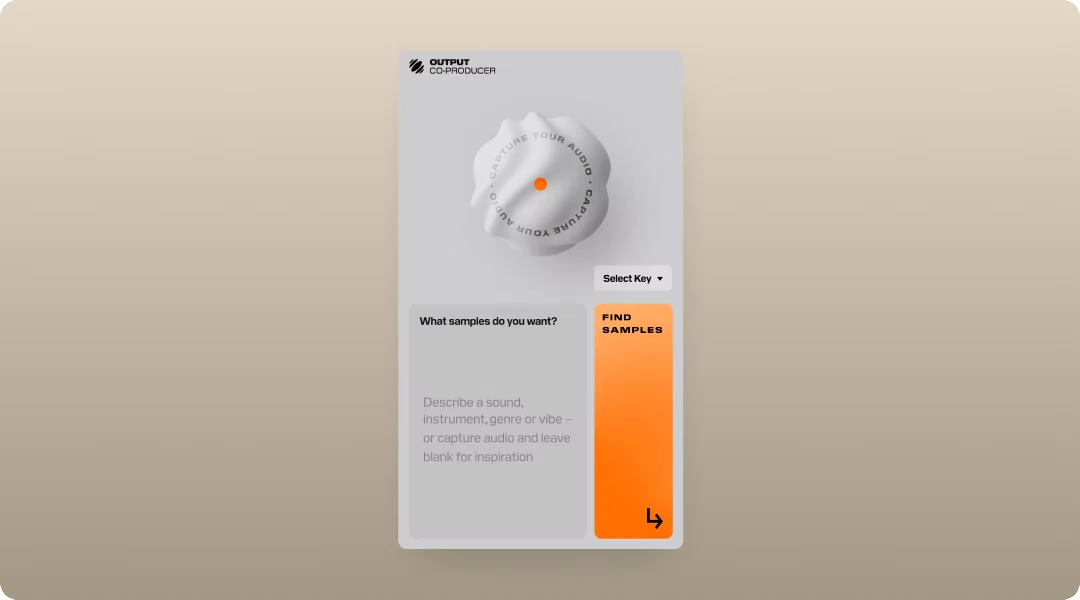
Co-Producer listens to your session and surfaces samples that fit what you're making. Drop it on your master track, play your loop, and it analyzes harmony, rhythm, and energy to recommend elements that work.
- Session analysis: Recommends samples based on what's already in your track. When capturing audio, 8-bar captures generally yield better results since Co-Producer has more harmonic and rhythmic content to analyze. Use 4-bar captures when working with shorter loops or more focused sections.
- Tempo sync: Previews lock to your project tempo automatically
- Re-imagine: Creates unique variations of any sample so you're not using the same sounds as everyone else
You're auditioning samples in context and dragging them directly into your arrangement when something clicks.
Search tip: When using text search, structure your queries as Descriptor + Genre + Instrument. For Future type beats, try searches like "dark atmospheric pads," "moody piano melodies," or "heavy trap 808s" to surface samples that fit the vibe.
Arcade for Playable Loops and Manipulation
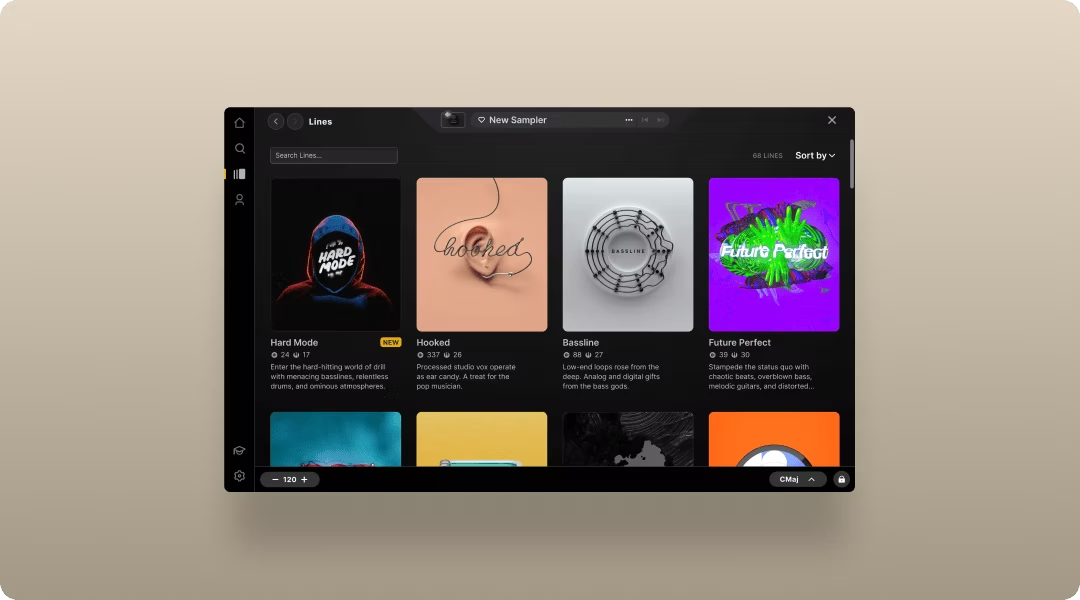
Once you've found raw material, Arcade turns samples into playable instruments. Load a melodic loop, lock it to your key and tempo, then chop and reshape it.
- Key and tempo lock: Everything syncs to your project automatically. Lock the Session Key to ensure all new Samplers load in your track's key rather than their original saved key.
- Modifiers: Playhead, Repeater, and Resequence controls for real-time manipulation
- Kit Generator:Drag in your own samples and auto-chop them into playable kits
Both tools are available through Output One alongside Portal, Thermal, and Movement.
Turn a Type Beat Into Your Own Track
Starting with a type beat reference is useful for learning the style. The goal is making something that sounds like you.
Re-harmonize With New Chords
Keep the same rhythmic pocket but swap the chord progression. If your reference uses a i-VI-III-VII progression, try a i-iv-v in the same key. The drums stay familiar, but the harmonic identity becomes yours.
Re-chop for New Rhythm and Phrasing
Take melodic elements and slice them into new patterns. A four-bar loop becomes eight one-beat chops that you rearrange into a different phrase.
Arcade's Modifiers—Resequence, Playhead, and Repeater—let you reimagine loops in real-time. Resequence slices samples into up to 16 markers you can reorder on the fly. This is faster than manual chopping and lets you audition variations until something clicks.
Swap Sound Sources
Replace one or two core elements with sounds from a different palette. Keep the 808 and drums but swap the pad for a guitar texture. Small changes compound into a distinct identity.
Add Character With Saturation and Space
Raw sounds need processing to sit in a mix. Saturation adds harmonic content. Spatial effects create depth.
Multiband Saturation for Clean Lows and Hyped Mids
Standard saturation affects the entire frequency range, which can muddy your low end. Multiband processing lets you add warmth to mids and highs while keeping sub-bass clean.
Thermal handles this with frequency-focused distortion and an XY control for dialing in the right amount of heat.
- 15+ distortion types: Analog-inspired and digital flavors for different tonal characters
- Multi-stage processing: Stack distortion stages for complex harmonic content
- Mid-Side width: Shape stereo image while processing
The Band Split feature lets you isolate specific frequency ranges per stage—essential for keeping your 808 sub-bass clean while adding grit to the mids. Use the Refilter option to tame any harsh harmonics the distortion creates.
FabFilter Saturn 2 is another solid option for surgical multiband control.
- Dynamic modulation: Distortion responds to input level for natural-feeling saturation
- Linear-phase crossovers: Clean band separation without phase artifacts
- Per-band processing: Independent controls for each frequency range
Parallel Distortion for Loudness
Blend a heavily distorted signal with your clean original. This adds perceived loudness without destroying transients. Set up a parallel bus, crush it with saturation, then mix it underneath your dry signal.
Stereo Width With Mono-Safe Low End
Wide mixes sound impressive in headphones but fall apart on club systems if the low end isn't centered. Use mid-side processing to widen mids and highs while keeping everything below 100Hz in mono.
Portal adds spatial texture through granular processing, creating width and movement that stays musical.
- Scale-locked pitch: Granular effects stay in key with your track
- Tempo-synced grains: Rhythmic textures that lock to your BPM
- XY performance control: Morph between granular states in real time
Use Portal on pads or vocal chops to push them into the background while your 808 stays anchored. The Scale parameter quantizes granular pitch effects to your track's key, so even heavily processed textures stay harmonically coherent with your dark minor progressions.
Make the Beat Rap-Ready
A beat that sounds great solo might not work for a vocalist. Freestyle rap beats need specific structural considerations.
Leave Topline Space in the Arrangement
The 1-4kHz range is where vocals live. If your melodic elements are dense there, the vocalist has to fight for space. Use EQ to carve out room, or choose sounds that naturally sit above or below.
Verses need sparse instrumentation. Hooks can be fuller. Build your beat with these dynamics in mind.
Build Energy With Drops, Mutes, and Fills
Phrase boundaries need punctuation. Use drum fills at the end of 8-bar sections, filter sweeps leading into hooks, and strategic mutes that create tension.
Movement creates rhythmic animation without manual automation, useful for building energy through modulated filter sweeps and pumping effects.
- Four rhythm engines: LFO, step sequencer, sidechain, and Flux mode
- 152 modulatable parameters: Animate nearly any control in real time
- Built-in effects: Filter, delay, distortion, compression, and reverb in one plugin
The sidechain engine is particularly useful for Future type beats—it creates that pumping, breathing effect on pads and melodic elements that gives the half-time groove its hypnotic quality without needing to set up actual sidechain compression.
These moments give vocalists natural entry points and keep the beat from feeling static. A YouTube type beat that holds attention needs dynamic movement, not just a loop on repeat.
Get Started With Output One
Everything covered here, from finding sounds to processing them into a finished beat, works faster with the right tools. Output One bundles Co-Producer, Arcade, Portal, Thermal, and Movement into a single subscription with unlimited royalty-free sounds.
- Co-Producer: Find samples that match your track's vibe instantly
- Arcade: Turn samples into playable instruments you can chop and reshape
- Portal: Add granular texture and spatial depth
- Thermal: Shape tone with multi-stage distortion
- Movement: Create rhythmic animation without manual automation
FAQ
Why does my 808 sound muddy when I add glide?
Long glide times create overlapping notes that stack up in the low end. Shorten your glide time or use a mono legato mode so only one note plays at a time.
How do I make my hi-hats sound less robotic?
Add swing to your hi-hat pattern and vary the velocity of each hit. Small timing variations and dynamic changes create human feel.
What key should I use for a Future type beat?
Minor keys work best. A minor, C minor, and F# minor are common choices. The specific key matters less than staying consistent throughout the track.
How many elements should play at once during a verse?
Keep verses sparse. Drums, 808, and one melodic element is usually enough. Save density for hooks and transitions.
Output One gives you Co-Producer, Arcade, Portal, Thermal, Movement, and more—so you can dial in sounds, add ear candy, and finish your mix with one subscription. Try the full workflow together and keep the momentum from idea to mixdown.
Try it free