

Best Lo-Fi Plugins for Texture, Grit, and Character
From saturation and tape emulation to bit-crushing and granular FX, here are the best lo-fi plugins for adding grit, warmth, and vintage texture—plus how to chain them for maximum character without muddying your mix.

Get Co-Producer and Arcade with unlimited access to premium, royalty-free samples and instruments. Plus, unlock Portal, Thermal, and Movement.
Try it freeBest Lo-Fi Plugins for Texture, Grit, and Character
Lo-fi production is about intentional imperfection, and the right FX plugins give you control over every layer of grit, warmth, and texture. From saturation and tape emulation to bit-crushing and granular processing, these tools shape how your tracks feel.
What makes a lo-fi sound
Lo-fi is an aesthetic built on imperfection. It prioritizes warmth over clarity, texture over polish, and character over pristine fidelity.
The sound comes from specific sonic fingerprints that evoke analog playback systems. You're hearing reduced high-frequency content, harmonic saturation, pitch instability, and noise layers working together.
- Rolled-off highs: Filtering that mimics tape or vinyl playback, removing harshness and creating intimacy
- Harmonic saturation: Distortion that adds warmth and complexity to the harmonic series
- Pitch instability: Wow, flutter, and drift from analog playback mechanisms
- Noise textures: Vinyl crackle, tape hiss, and room tone used as compositional elements
These aren't accidents. They're intentional processing decisions that shape how audio feels.
Saturation and distortion for lo-fi warmth
Saturation adds overtones to your audio. This makes thin sounds feel fuller and gives digital sources the weight of analog gear.
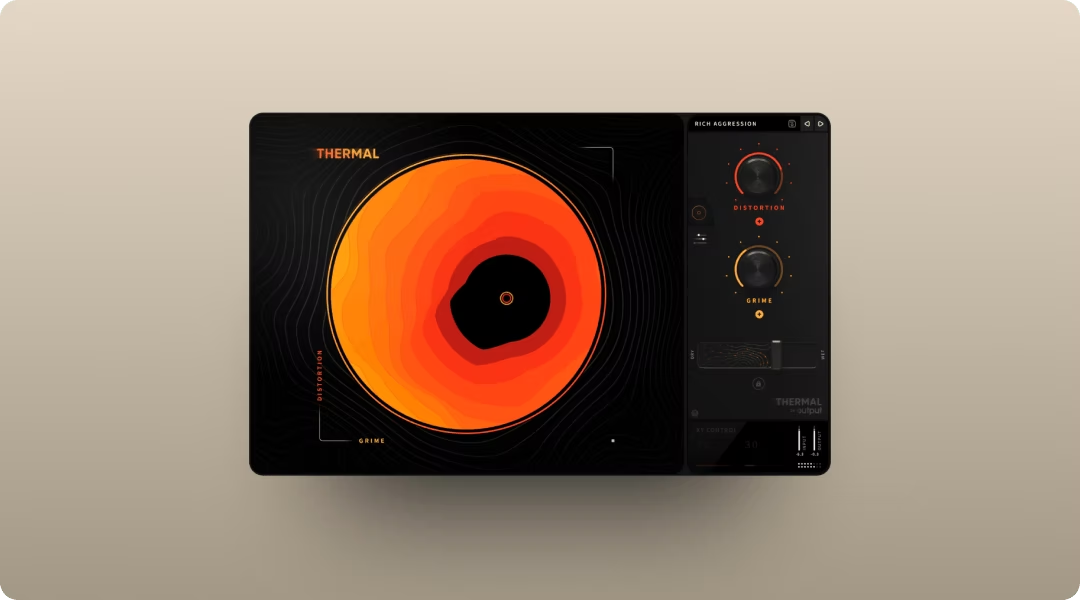
Output Thermal handles this with a multi-stage distortion engine and over 15 distortion types. The XY control lets you morph between settings in real time, which makes finding the right amount of grit fast. The multiband processing is useful for lo-fi because you can add character to mids without muddying the low end.
- Multi-stage processing: Stack up to three distortion stages for complex harmonic content. Solo individual stages to hear exactly how each one affects your signal, making it easier to dial in the right amount of grit.
- XY macro control: Blend parameters visually and perform changes in real time
- Multiband capability: Target specific frequency ranges for precise saturation. The Band Split feature lets you isolate exactly which frequencies receive distortion, while Refilter removes unwanted harmonics—essential for keeping lo-fi warmth without muddiness.
Thermal is available individually or through Output One, which bundles it with Portal, Movement, Arcade, and Co-Producer.
Soundtoys Decapitator offers analog saturation modeled after classic hardware. The "punish" mode pushes things into more aggressive territory when you need it.
- Five analog models: Emulations of classic hardware saturation circuits
- Punish mode: Adds aggressive compression and drive for heavier tones
- Tone control: Shapes the frequency response of the saturation
iZotope Trash provides deep sound-mangling with convolution and multiband distortion for when you want to push further into destruction.
- Convolution engine: Load impulse responses for unique distortion textures
- Multiband architecture: Process up to four frequency bands independently
- Extensive preset library: Quick starting points for different saturation flavors
Tape and vinyl emulation plugins
Tape and vinyl emulation recreates the mechanical imperfections of analog playback. These plugins add pitch instability, noise, and frequency response changes that give vintage recordings their character.
Wow refers to slow pitch variations. Flutter describes faster pitch wobble. Both create organic movement that makes static digital audio feel alive.
Aberrant DSP Sketch Cassette focuses on cassette tape emulation with adjustable wow, flutter, and noise parameters. It captures the specific character of different cassette types.
- Multiple tape types: Different cassette formulations with distinct frequency responses
- Adjustable wear: Control how "used" the tape sounds
- Stereo wobble: Independent pitch variation for left and right channels
iZotope Vinyl is free and covers vinyl emulation with dust, scratch, warp, and mechanical noise. It's a solid starting point if you're exploring lo-fi processing.
- Dust and scratch controls: Add vinyl surface noise to taste
- Warp simulation: Recreates the pitch drift of warped records
- Year selector: Adjusts frequency response to match different eras
Wavesfactory Cassette offers detailed tape emulation with multiple cassette type models for different flavors of degradation.
- Four-head tape machine: Separate controls for record and playback characteristics
- Tape age simulation: Adds the artifacts of aged magnetic tape
- Built-in compander: Recreates the noise reduction systems of cassette decks
Bit-crushing and sample rate reduction
Bit-crushing reduces the resolution of digital audio. This creates the crunchy, lo-res artifacts associated with vintage samplers and early digital gear.
Bit depth reduction introduces quantization noise, adding grainy texture. Sample rate reduction creates aliasing artifacts that range from subtle grit to obvious digital distortion.
D16 Decimort 2 provides high-quality bit-crushing with jitter and anti-aliasing controls. It recreates the sound of classic hardware samplers with precision.
- Sampler emulation: Models the converters of specific vintage hardware
- Jitter control: Adds clock instability for more organic degradation
- Resampling modes: Different interpolation algorithms for varied character
Goodhertz Lossy emulates codec artifacts and digital compression. It's a different kind of lo-fi texture that sounds like compressed audio files.
- Codec emulation: Recreates MP3 and streaming compression artifacts
- Quality slider: Dial in the amount of digital degradation
- Analog-style interface: Simple controls for fast results
TAL-Bitcrusher is free and straightforward for basic bit-crushing needs.
- Bit depth control: Reduce resolution from 16-bit down to 1-bit
- Sample rate reduction: Downsample for aliasing artifacts
- Dry/wet mix: Blend processed and clean signals
If you're using Arcade for samples, its built-in Lo-fi effect module offers sample rate and bit depth reduction directly on your loops—no need for a separate plugin in the chain.
Filtering and EQ for the lo-fi frequency spectrum
Filtering shapes lo-fi sound by controlling which frequencies reach the listener. The characteristic "telephone" or "transistor radio" mid-focus comes from aggressive filtering.
Low-pass filters remove harshness and create the muffled quality of vintage playback. High-pass filters clean up rumble while maintaining warmth.
FabFilter Pro-Q 3 offers surgical EQ with dynamic bands for precise frequency shaping. It's useful when you need exact control over the lo-fi frequency curve.
- Dynamic EQ bands: Frequency-dependent processing that responds to input level
- Linear phase mode: Transparent filtering without phase artifacts
- Spectrum analyzer: Visual feedback for precise adjustments
Soundtoys FilterFreak provides analog-modeled filters with modulation options. The rhythmic filtering adds movement to static sounds.
- Dual filter architecture: Two filters in series or parallel configurations
- Rhythm section: Tempo-synced filter modulation patterns
- Analog modeling: Warm filter character with resonance
Modulation and movement effects
Modulation effects add pitch and timbral movement that makes lo-fi tracks feel alive. Chorus, flanger, phaser, and vibrato prevent static loops from becoming fatiguing.
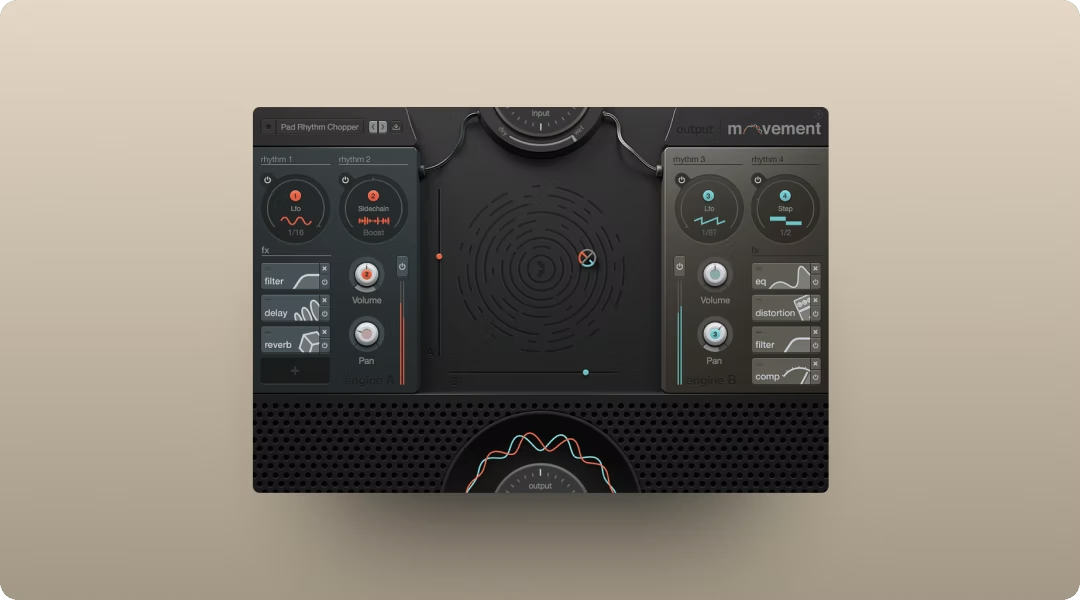
Output Movement is a rhythmic FX engine that adds tempo-synced modulation to any parameter. The sidechain, LFO, and step sequencer options create pumping, breathing textures that evolve over time.
- Four rhythm engines: LFO, step sequencer, sidechain, and Flux modulation. The sidechain engine creates that signature lo-fi pumping effect without needing an external trigger, while the step sequencer lets you program precise rhythmic filter sweeps.
- 152 modulatable parameters: Deep control over every aspect of the effect
- XY performance pad: Real-time control for recording automation
Movement is available through Output One alongside Thermal, Portal, Arcade, and Co-Producer.
Valhalla Space Modulator is free and offers flanging and modulation with deep controls. It's surprisingly capable for a free plugin.
- 11 modulation modes: Different flavors of chorus, flanger, and dimensional effects
- Warp control: Pushes modulation into more extreme territory
- Stereo width: Adjustable spread for spatial effects
Reverb and space for lo-fi depth
Reverb adds depth without washing out the mix. Lo-fi production favors shorter, darker reverbs that create intimacy rather than cavernous spaces.
Plate and spring reverbs suit lo-fi better than pristine digital algorithms. They add character along with space.
Valhalla Vintage Verb delivers lush reverbs inspired by classic hardware. The different modes cover everything from tight rooms to expansive halls.
- Multiple reverb modes: Concert hall, chamber, room, plate, and more
- Color control: Adjusts the brightness of the reverb tail
- Modulation depth: Adds movement to the reverb for vintage character
Output Portal creates unique spatial textures through granular processing. It smears and scatters audio into evolving ambient washes that work well for lo-fi atmospheres.
- Granular engine: Breaks audio into grains for texture manipulation
- Scale-locked pitch: Keeps pitch-shifted grains musically coherent by quantizing to your chosen scale, interval, or chord. Set it to your track's key and random pitch variations will always land on musically pleasing notes.
- Tempo-synced grain delay: Rhythmic granular effects that lock to your track
Portal is available through Output One.
Soundtoys Little Plate offers plate reverb emulation with simple controls. It's quick to dial in and sits well in lo-fi mixes.
- Single-knob decay: Simple control for reverb length
- Modulation: Adds subtle movement to the reverb tail
- Low-cut filter: Removes low-frequency buildup
Granular and texture FX for lo-fi sound design
Granular effects break audio into tiny grains and reassemble them. This creates textures ranging from subtle shimmer to complete sonic destruction.
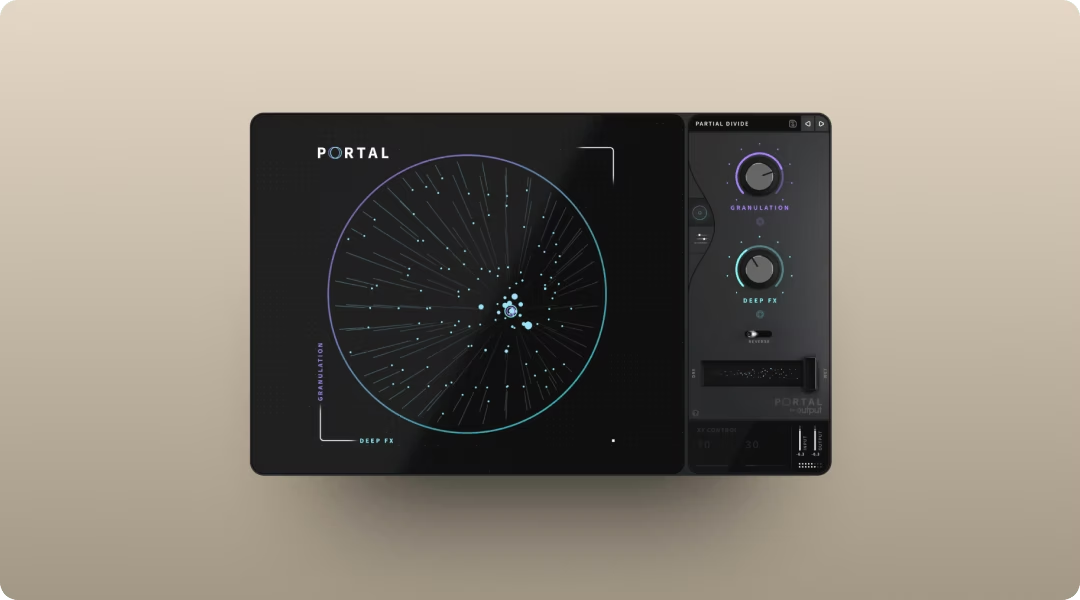
Output Portal excels at turning simple source material into evolving, textured pads. The XY control makes finding musical sweet spots fast, and the scale-locked pitch modulation keeps things coherent.
Arturia Efx Fragments offers a granular playground for glitch and texture work. It's more experimental and less immediately musical than Portal.
- Grain cloud visualization: See the granular processing in real time
- Multiple grain modes: Different algorithms for varied textures
- Extensive modulation: LFOs and envelopes for evolving sounds
Audio Damage Quanta 2 is a granular synthesizer that can process external audio. It's deep but requires more setup than insert-style granular FX.
- Five grain sources: Multiple ways to generate and manipulate grains
- Built-in effects: Delay, reverb, and filtering in the plugin
- Modulation matrix: Complex routing for evolving textures
Lo-fi drum processing techniques
Drums need specific treatment to achieve the dusty, vintage character that defines lo-fi—or you can start with lo-fi drum samples that already have that texture baked in. The goal is adding grit while maintaining enough punch to drive the track.
- Saturation on the drum bus: Glues hits together and adds warmth
- Bit-crushing on hi-hats: Reduces harshness and adds grit
- Tape emulation on the full kit: Adds cohesion and vintage character
- Filtering individual hits: Shapes each element for the lo-fi frequency spectrum
Thermal works well on a drum bus for controlled saturation. Movement can add rhythmic pumping to the entire kit, creating the breathing effect common in lo-fi production.
Building a lo-fi FX chain
Signal flow matters when stacking effects. The order of your plugins affects the final result.
A typical lo-fi chain follows this order: EQ and filtering first to shape frequency content, then saturation to add harmonics, followed by modulation for movement, then tape or vinyl emulation for analog degradation, and finally reverb for depth.
Less is often more. One well-chosen character plugin per bus often beats stacking multiple subtle effects. Resampling and re-processing can yield more interesting results than real-time plugin chains.
Finding lo-fi samples and instruments
Starting with the right source material reduces the need for heavy processing. Pre-processed samples with baked-in character get you to a lo-fi sound faster—lo-fi sample packs give you that vintage texture without the processing chain.
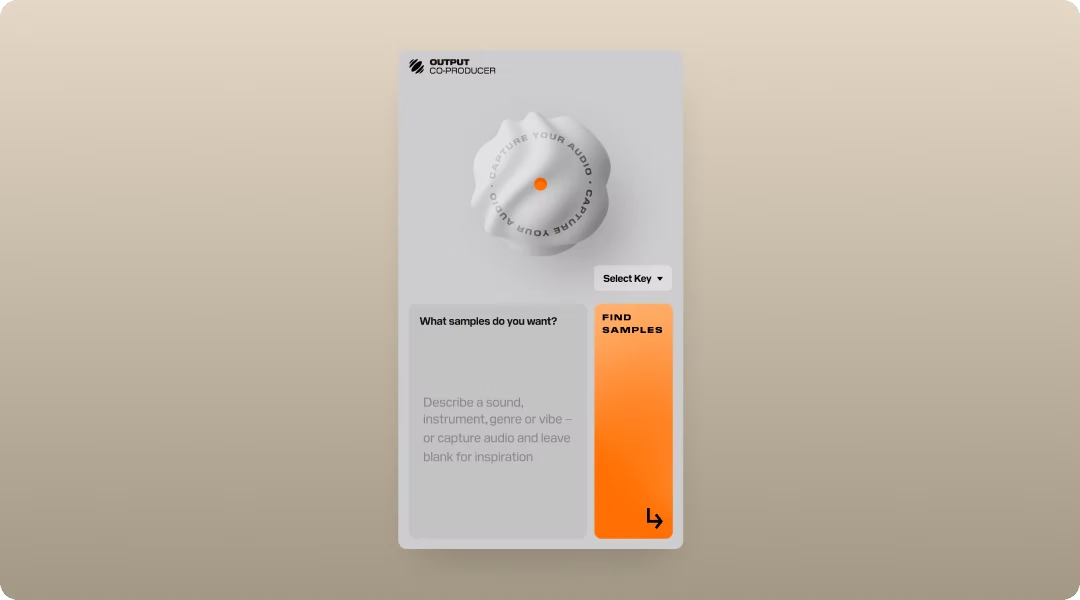
Output Co-Producer listens to your session and recommends samples that fit your track's key, tempo, and vibe. You can drag and drop directly into your DAW, and the Re-imagine feature uses AI to create infinite, one-of-a-kind variations of any sample—useful for generating unique lo-fi textures that won't appear in anyone else's tracks.
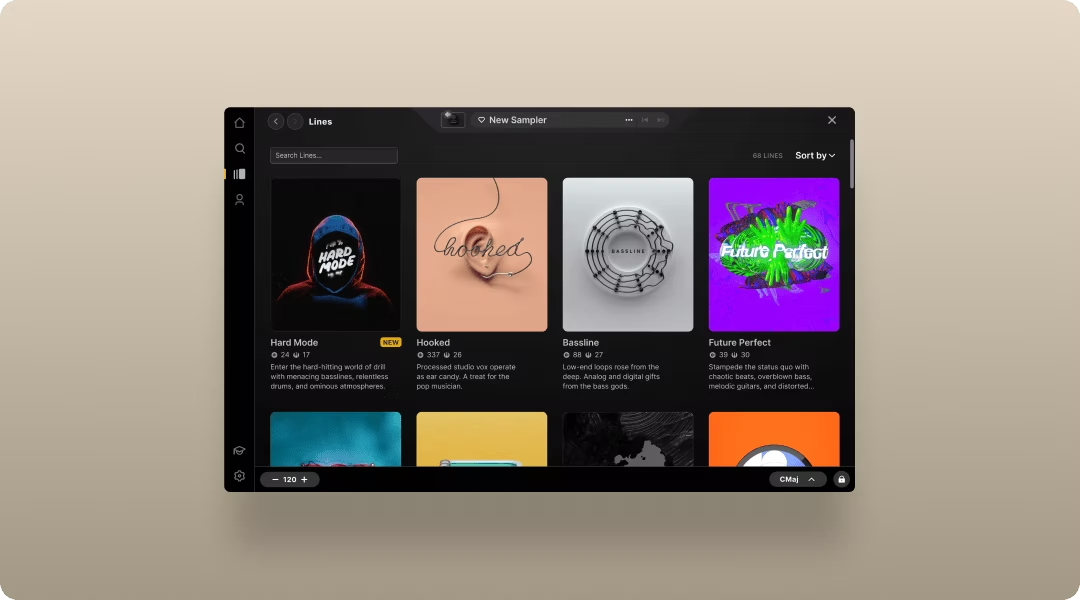
Output Arcade offers playable lo-fi kits and instruments. You can manipulate, chop, and reshape samples in real time with built-in FX and macros. Many lo-fi kits include macro controls like 'Tape FX' for instant saturation and 'Wash Out' for reverb-drenched textures—dial in vintage character with a single slider.
Both Co-Producer and Arcade are available through Output One alongside Portal, Thermal, and Movement.
Start building your lo-fi toolkit
Start with one or two key plugins rather than buying everything. Lo-fi production is about taste and restraint, not plugin quantity.
Output One provides access to Thermal, Portal, and Movement alongside Arcade and Co-Producer for one subscription price. This gives you saturation, granular processing, rhythmic modulation, playable samples, and sample discovery in one package.
FAQ
What is the best free plugin for adding vinyl texture?
iZotope Vinyl is a solid free option with dust, scratch, warp, and mechanical noise controls that cover most vinyl emulation needs.
Can you achieve lo-fi sound using only stock DAW plugins?
Yes, stock EQ, saturation, and filters can achieve lo-fi results. Dedicated plugins speed up the process and offer more character, but they're not required.
Should lo-fi effects go on individual tracks or the mix bus?
Both approaches work. Processing individual tracks gives more control, while mix bus processing adds cohesion across the entire track.
What is the difference between tape emulation and vinyl emulation plugins?
Tape emulation adds saturation, compression, and wow/flutter from magnetic tape. Vinyl emulation adds crackle, pops, and mechanical noise from record playback.
Output One includes Thermal, Arcade, Portal, Movement, and Co-Producer—everything you need for texture, grit, and character in one place. Get them all together (plus every FX expansion) and start creating faster.
Try it free