
Building a Don Toliver Type Beat in Your DAW
Break down the half-time grooves, 808 glides, and psychedelic textures behind a Don Toliver type beat—from drum programming and chord voicings to arrangement moves and mix choices that keep everything wide, clean, and ready for vocals.

Get Co-Producer and Arcade with unlimited access to premium, royalty-free samples and instruments. Plus, unlock Portal, Thermal, and Movement.
Try it freeBuilding a Don Toliver Type Beat in Your DAW
Don Toliver's sound lives in the space between melodic trap and psychedelic R&B, built on half-time grooves, atmospheric pads, and room for reverb-drenched vocals to float. This breakdown covers the drums, 808s, chords, and arrangement choices that define the style, plus how tools like Co-Producer, Arcade, Portal, and Thermal can keep you in flow while you build.
What Is a Don Toliver Type Beat?
A Don Toliver type beat is an instrumental that captures the spacey, psychedelic melodic trap sound heard on tracks like "No Idea," "After Party," and across albums like Heaven or Hell and Love Sick. This means you're building beats with atmospheric pads, half-time drum grooves, and plenty of room for reverb-drenched vocals.
The term "type beat" is producer shorthand for instrumentals that match a specific artist's vibe. Producers upload these to YouTube for placements, beat leasing, or portfolio building—and trap loops can accelerate the process.
Here's what defines the sound:
- Melodic trap foundation: Minor-key progressions with synth pads and evolving textures
- Half-time feel: The snare hits on beat three, making the groove feel slower than the actual tempo
- Vocal-centric space: Lots of room for reverb-heavy hooks and processed vocal layers
- Psychedelic ear candy: Delay throws, pitch-shifted ad-libs, and granular textures that create movement
This style rewards restraint. The beat needs to breathe so vocals can float without fighting for space.
Tempo and Groove for a Don Toliver Type Beat
Don Toliver tracks typically land between 130 and 150 BPM, but they feel slower because of half-time drum programming. The snare hits on beat three instead of beats two and four. This creates that laid-back, hypnotic bounce.
Your tempo choice matters less than how you place the drums within it. Swing is essential here. Straight, quantized hi-hats sound stiff against this style.
- Swing amount: Add 5% to 15% swing to your hi-hat patterns depending on your DAW
- Triplet subdivisions: Use triplet hi-hat rolls sparingly for rhythmic interest
- Groove quantize: Avoid over-quantizing; leave room for imperfection
The goal is groove, not complexity. Let the pocket breathe.
Drum Sounds and Patterns for Don Toliver Type Beats
Drum selection shapes the entire feel. You want soft, punchy kicks that don't compete with the 808 sub frequencies. The snare and clap should be layered with a reverb tail, placed on the half-time pulse.
Hi-hats need velocity variation and open hat accents to feel alive. Ghost notes and rimshots add texture between the main hits without cluttering the mix.
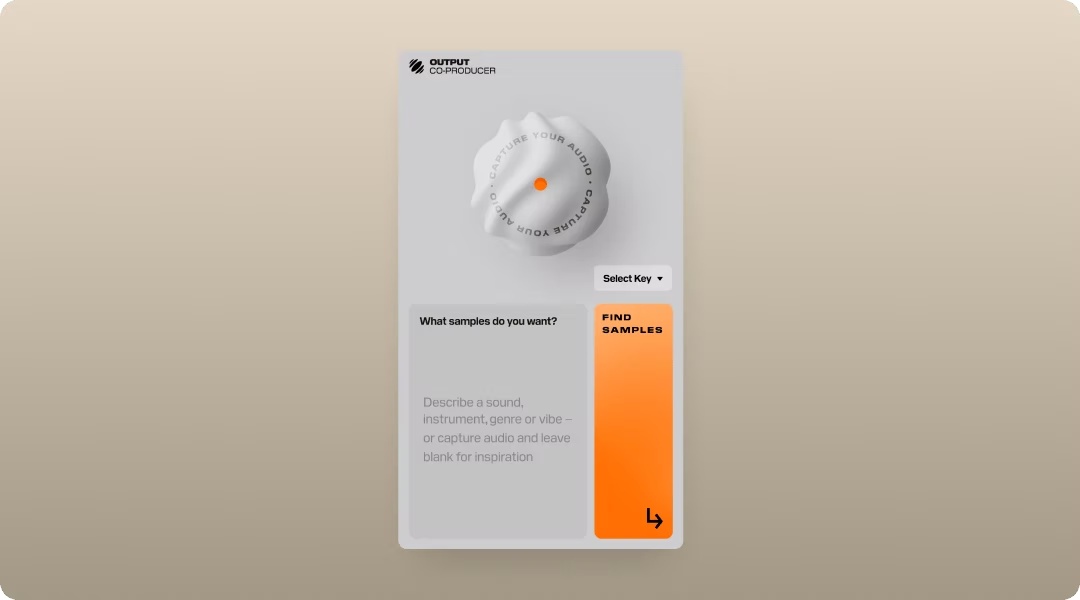
When you're searching for the right drum one-shots, Co-Producer can surface samples that fit your session's vibe. It listens to what you're making and recommends royalty-free sounds matched to your track's tempo and feel. Load it on your master track's FX insert and drag samples directly into your session.
- Kick: Soft attack, punchy body, sitting below the 808's sub frequencies
- Snare and clap: Layered with reverb tail, placed on the half-time pulse
- Hi-hats: Velocity variation, open hat accents, occasional triplet rolls
- Ghost notes: Subtle rimshots and percussion between main hits
808 and Bass Design for Don Toliver Type Beats
The 808 carries the low end and often functions as a melodic element. Tuning is critical. Match your 808 to the root note of your progression, and use a tuner plugin if you're unsure.
Glides between notes create that signature melodic bass movement. Dial in your portamento settings so the 808 slides smoothly from note to note.
Harmonic saturation helps the 808 translate on smaller speakers. Adding upper harmonics gives the bass presence without losing sub weight. Thermal can add controlled saturation to 808s, letting you shape the harmonic content with its multi-stage distortion engine. Thermal's band-split feature lets you apply saturation only to the upper harmonics of your 808 while leaving the sub frequencies clean—use the Auto gain compensation to keep levels consistent as you dial in drive. It's available in Output One alongside Co-Producer, Arcade, Portal, and Movement.
- Tuning: Match the 808 to your root note
- Glide and portamento: Slide between notes for melodic bass lines
- Harmonic saturation: Add upper harmonics so the bass translates on all systems
- Sidechain: Duck the 808 slightly under the kick for punch and clarity
Decapitator from Soundtoys is another solid option for adding harmonic content to 808s.
- Five saturation styles: Analog-modeled drive circuits from subtle warmth to aggressive crunch
- Punish mode: Extreme saturation for aggressive tones
- Mix control: Blend processed and dry signals for parallel saturation
Chords and Melodies for Don Toliver Type Beats
Minor keys dominate this style. Natural minor and harmonic minor scales both work well, with harmonic minor adding that slightly darker, more exotic flavor.
Extended chords like 7ths and 9ths create the lush, emotional progressions that define the sound. Spread your voicings across octaves to avoid mud in the low-mids.
Counter-melodies should be simple and repetitive. They complement the main progression without competing for attention.
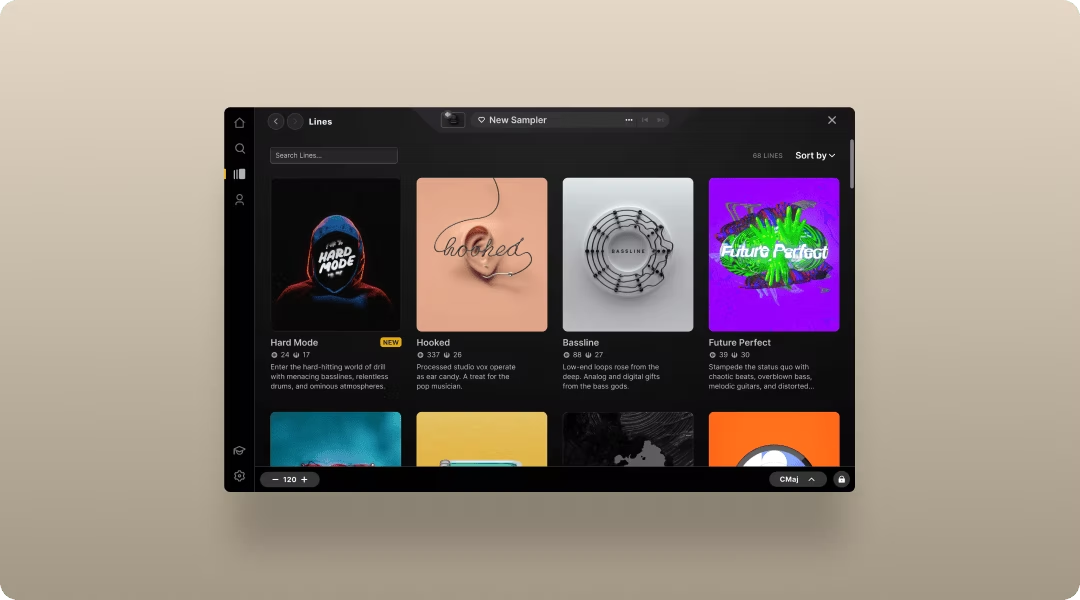
Arcade's chromatic instruments let you play and manipulate melodic ideas quickly, locking everything to your session's key and tempo. Arcade's Instruments provide up to 88 keys of chromatic playability, and you can layer up to three sources simultaneously—useful for stacking a sub bass with a melodic element. Each Arcade Kit includes four Macro sliders that control multiple parameters at once—useful for adding movement to melodic loops without programming complex automation. Load it as an instrument plugin on a software instrument track and start playing. When you need a melodic loop that fits, Co-Producer can find options that match your track's harmonic content. Learn how to set your session key in Arcade to ensure samples match your track's harmonic content.
- Key selection: Minor keys dominate; natural minor and harmonic minor work well
- Extended chords: Add 7ths and 9ths for lush, emotional progressions
- Voicings: Spread voicings across octaves to avoid mud
- Counter-melodies: Simple, repetitive lines that complement the main progression
Scaler 2 from Plugin Boutique is useful for exploring chord progressions if you want more harmonic options.
- Chord detection: Analyzes audio or MIDI to identify chords
- Progression builder: Suggests chord movements based on music theory
- Performance modes: Strumming, arpeggiation, and phrase patterns
Vocal Texture and Ear Candy for Don Toliver Type Beats
This is where the psychedelic vibe lives. Vocal chops act as melodic hooks, short pitched phrases that weave through the beat. Formant shifting alters the character of vocals without changing pitch, creating those alien, processed textures.
Delay throws on specific words or phrases add movement and space. Automate your delay sends to catch specific moments rather than running delay constantly.
Granular processing can turn a simple vocal sample into an evolving ambient wash. Portal handles this well, breaking audio into grains and re-synthesizing it in real time with tempo-synced timing and scale-aware pitch modulation. Portal's Scale parameter quantizes pitch shifts to your chosen scale, so granular textures stay harmonically coherent with your track—essential for melodic trap where everything needs to sit in key. Check out Portal's preset library for starting points. Insert it on any audio or aux track to process vocals, pads, or textures.
Exhale, Output's vocal engine, provides playable vocal phrases and textures that work as melodic or textural elements. Both Portal and Exhale are available in Output One.
- Vocal chops: Short, pitched phrases that act as melodic hooks
- Formant shifting: Alter the character of vocals without changing pitch
- Delay throws: Automate delay sends for specific words or phrases
- Granular textures: Smear and scatter vocal elements into ambient washes
Valhalla Delay is another strong choice for creating spacey delay effects.
- Tape and analog modes: Warm, degraded delay tones
- Diffusion control: Smear delays into reverb-like textures
- Ducking: Automatically reduces delay volume when input signal is present
Step-by-Step Arrangement for a Don Toliver Type Beat
Arrangement separates a loop from a finished beat. The structure needs to build, breathe, and create moments that keep listeners engaged.
Step 1: Build the Main Loop
Start with your chords or a melodic sample. Add drums once the harmonic foundation feels right, then layer the 808. Keep this to four or eight bars. This loop is the foundation everything else builds from.
Step 2: Add Drums and a Bass Drop
Program your half-time drum pattern first. Introduce the 808 after a bar or two of drums only. Withholding elements initially creates anticipation and makes the drop hit harder.
Step 3: Write an A Section and a B Section
Duplicate your loop, then subtract or add elements to create contrast. The B section might drop the drums entirely or introduce a new melodic layer. Variation keeps the beat interesting across two to three minutes.
Step 4: Add Breaks, Switches, and Turnarounds
Use risers, reverse reverb, and filter sweeps to transition between sections. Automate effects for movement.
Movement can add rhythmic modulation to pads or synths during transitions, creating animated textures without manual automation. Insert Movement on any pad or synth track and use the XY pad to dial in tempo-synced motion—the modulation stays locked to your session's BPM, so transitions feel musical rather than random. Insert it on any track's FX slot and use the XY pad to dial in tempo-synced motion. It's included in Output One.
Step 5: Set Up the Outro and Dropouts
Strip elements away gradually. Let the beat breathe. A dropout before the final chorus or hook creates impact and gives the track a sense of resolution.
Mix Choices That Keep a Don Toliver Type Beat Wide and Clean
The mix needs to feel spacious without losing clarity. Gain staging is the foundation. Keep headroom on your master bus and avoid clipping during the production phase.
EQ carving creates room for vocals. Cut low-mids on pads and synths so the vocal range stays open. Push reverbs and delays wide in the stereo field while keeping bass and kick centered.
Light compression and saturation on the drum bus add cohesion. Thermal can add subtle saturation to the mix bus for glue, while Portal can create stereo interest on pads and textures.
- Gain staging: Keep headroom on the master bus; avoid clipping
- EQ carving: Cut low-mids on pads and synths to leave room for vocals
- Stereo imaging: Push reverbs and delays wide; keep bass and kick centered
- Bus processing: Light compression and saturation on the drum bus for cohesion
A Faster Sample Workflow with Co-Producer and Arcade
Finding the right samples can eat hours. Co-Producer speeds this up by listening to your session and surfacing royalty-free, musician-made samples that fit your track's tempo and feel.
Load it on your master track's FX insert, and it analyzes what you're making in real time. Co-Producer captures 4 or 8 bars of your session—8 bars is recommended when available since it gives the algorithm more harmonic and rhythmic content to analyze for better sample matches. Once you find samples, drag them directly into your DAW without leaving the session.
The Re-imagine feature generates unique variations of any sample, so you're not using the same sounds as everyone else. Arcade then lets you manipulate, chop, and play those samples as instruments. Use Arcade's Sampler Generator to slice samples across the keyboard and create custom kits. Load it on a software instrument track and start performing.
Both are included in Output One alongside Portal, Thermal, and Movement.
- Co-Producer: Analyzes your session and surfaces matching samples
- Drag and drop: Pull samples directly into your DAW
- Re-imagine: Generate unique variations of any sample
- Arcade: Chop, pitch, and perform samples as playable instruments
How to Title and Tag a Don Toliver Type Beat on YouTube
The search results for Don Toliver type beats are dominated by YouTube videos. Your metadata determines whether your beat gets found.
Title structure matters: lead with the artist name, include "type beat," add a mood descriptor, and include tempo and key. Something like "Don Toliver Type Beat 'Midnight' | Melodic Trap Instrumental | 140 BPM F Minor."
Tags should cover the artist name, genre tags, BPM, key, and related artist names like Travis Scott, Metro Boomin, or Gunna. Your description should state licensing terms clearly and link to your beat store or contact info.
If you're offering a free for profit beat, clarify what that means. It typically means free to use with credit, not an exclusive license.
- Title structure: "[Artist] Type Beat" + mood descriptor + tempo and key
- Tags: Include artist name, genre tags, BPM, key, and related artist names
- Description: State licensing terms clearly; link to your beat store
- Free for profit: Clarify that this means free to use with credit, not exclusive rights
Start Building Your Next Don Toliver Type Beat
The Don Toliver sound rewards patience and taste. Half-time grooves, spacey textures, and room for vocals define the style. The tools matter less than the decisions you make with them, but the right tools keep you in flow instead of fighting your workflow.
Output One bundles Co-Producer, Arcade, Portal, Thermal, and Movement for one price. If you're building melodic trap beats and want a faster path from idea to finished track, it's worth exploring.
You used Co-Producer, Thermal, Arcade, Portal, and Movement to shape that Don Toliver type beat—Output One includes all of them (plus every FX expansion) in one subscription. Get the whole workflow together and move from idea to finished track faster.
Try it free