

7 Synths for Making Ambient Music in 2026
Ambient music rewards the right tools and deep sound design. We break down the features that actually matter, seven software VST synths for ambient music worth your time in 2026, and the processing techniques that turn static pads into evolving, finished textures.

Get Co-Producer and Arcade with unlimited access to premium, royalty-free samples and instruments. Plus, unlock Portal, Thermal, and Movement.
Try it freeThe 7 Best Synth Plugins for Ambient Production
Ambient production lives and dies by texture, and your synth choice shapes everything from pad movement to spatial depth. Below, you'll find synths and tools built for slow modulation, evolving timbres, and the kind of sound design that rewards patience.
What defines ambient sound design
Ambient music puts texture ahead of melody. The genre treats sound design as the composition itself, where slowly evolving timbres and spatial depth carry the track instead of chord progressions or hooks. If you're building ambient, you're sculpting air.
The sonic palette centers on a few core elements:
- Pads and drones: Sustained tones that form the foundation. These aren't static. They shift, breathe, and morph over time.
- Texture layers: Granular elements or atmospheric noise that add depth without demanding attention. These sit behind the main voices and fill space.
- Spatial processing: Heavy reverb and delay create a sense of place. Ambient tracks often sound like they exist in a physical environment.
- Slow modulation: LFOs and envelopes that move parameters gradually over bars or minutes, not beats. Filter sweeps and stereo width shifts happen slowly enough that you feel them more than hear them.
This sound-design-first workflow means your synth choice matters more than in most genres. You need instruments that reward exploration and produce sounds worth listening to for extended periods.
Output Arcade playable sampler instrument
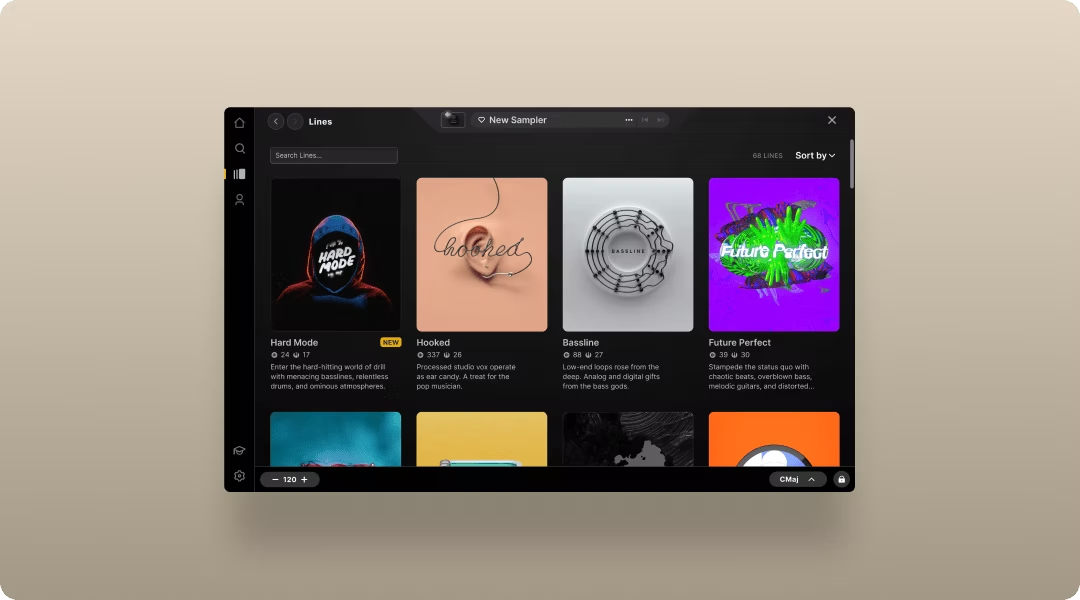
Arcade approaches ambient from a different angle than traditional synthesizers. Instead of building sounds from oscillators, you're working with curated loops and ambient samples that lock to your project's key and tempo. For ambient production, this means fast access to textural beds, atmospheric phrases, and evolving soundscapes you can manipulate in real time.
Load Arcade on a Software Instrument track in your DAW. The playable sampler workflow suits ambient's exploratory nature. You audition loops in context, then reshape them with macros and built-in FX until they fit your vision.
- Key and tempo sync: Arcade's Session Key feature automatically shifts all samples to match your project's key, eliminating pitch clashes. You can also lock the Session Key so all loaded Samplers maintain your chosen key throughout your session.
- Macro FX shaping: Each Kit includes four Macro sliders that control multiple parameters simultaneously—perfect for ambient's slow, evolving textures. Macros like 'Wash Out' add reverb and delay with a single gesture, letting you sculpt atmospheric sounds in real time.
- Layering approach: Stack multiple kits to build dense, evolving soundscapes. You can also use the Sampler Generator to create custom Kits from any imported audio sample, slicing and processing your own field recordings or textures.
The resampling workflow works well here. Bounce manipulated loops to audio, then process further with reverb or granular effects like Portal. Arcade's built-in modulation sources include LFOs with adjustable rates and a Chaos parameter that adds subtle randomization—ideal for the organic, slowly-shifting textures ambient music demands. Arcade is available as part of Output One, which bundles it with Portal, Thermal, Movement, and Co-Producer.
Vital wavetable synth
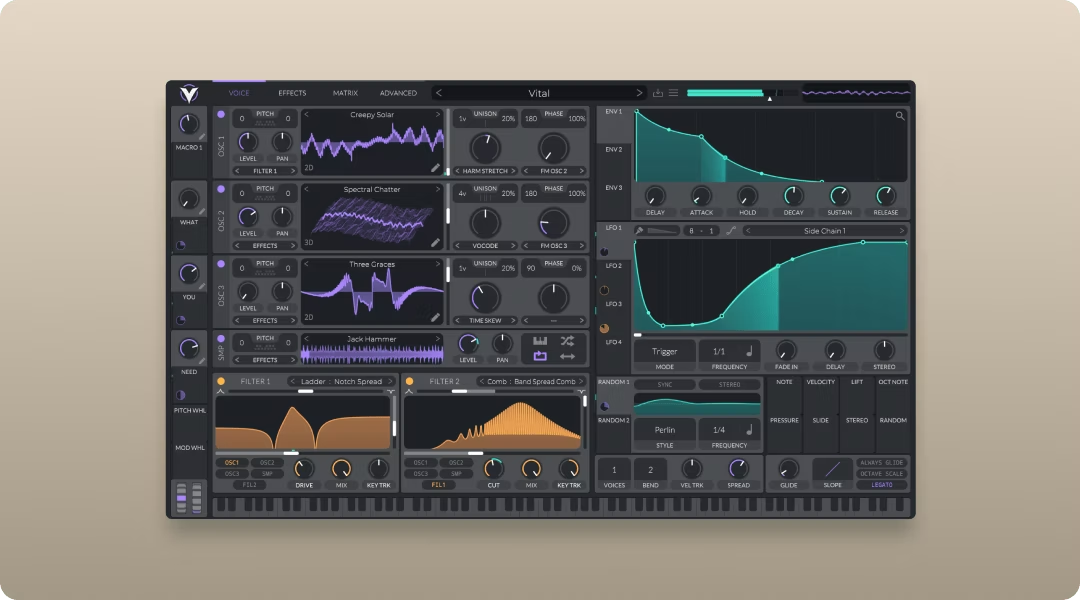
Vital has become a go-to ambient synthesizer for producers who want deep modulation without a steep learning curve. The wavetable engine produces rich, evolving timbres. The mod matrix lets you assign LFOs and envelopes to nearly any parameter.
The free tier covers most of what you need. Paid versions add more presets and wavetables, but the core engine remains the same. For ambient work, Vital's strength is creating sounds that evolve on their own.
- Wavetable morphing: Blend between waveforms over time. Set a slow LFO to scan through a wavetable and the sound shifts continuously.
- Mod matrix depth: Route an envelope to filter cutoff, another to wavetable position, and a third to reverb mix for complex, self-animating patches.
- Built-in FX: Onboard reverb, delay, and chorus shape sounds before they hit your channel strip.
You can create slowly shifting pads with complex internal motion that hold interest over long stretches. The unison and stereo spread controls create wide, immersive sounds that fill the stereo field.
Spectrasonics Omnisphere 2 hybrid synth
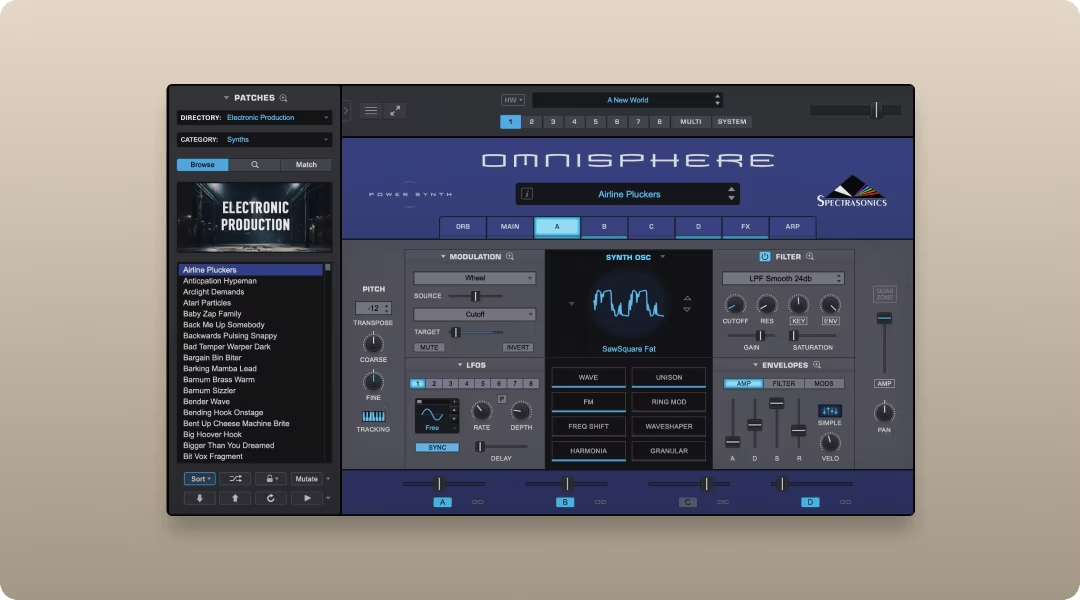
Omnisphere is the texture workstation for ambient producers who want massive sonic variety without building every sound from scratch. The hybrid engine combines sample layers with synthesis, giving you access to thousands of source sounds plus the tools to transform them.
The sound library alone justifies the investment for many producers. Pads, drones, textures, and hybrid timbres span styles and moods. But Omnisphere isn't just a preset machine. The synthesis engine lets you push sounds into new territory.
- Granular engine: Stretch samples into long, morphing soundscapes. Take a short phrase and turn it into a five-minute drone.
- Sound source depth: Thousands of patches spanning pads, drones, and hybrid timbres. You can spend hours exploring without repeating yourself.
- Modulation and FX rack: Build complex motion without external plugins.
The price point is higher than most options here, and CPU demands can be significant in dense sessions. But for producers who want a single instrument that covers vast sonic ground, Omnisphere delivers.
Surge XT hybrid synth
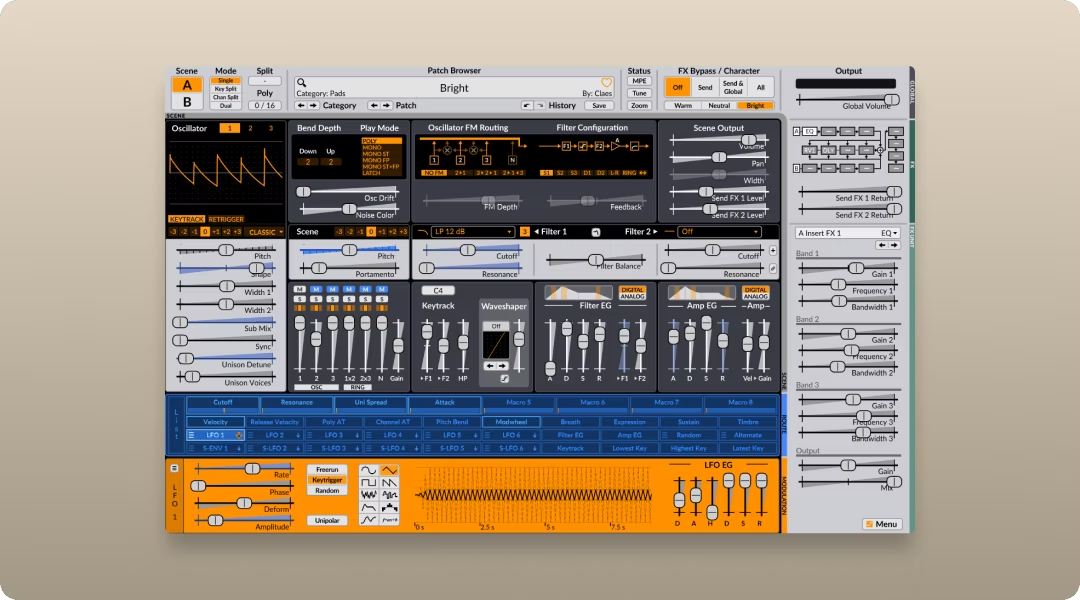
Surge XT proves that free doesn't mean limited. This open-source synth offers wavetable, FM, and subtractive engines in one package. The deep effects chain and mod routing rival paid options.
The multiple synthesis modes let you approach texture from different angles. Use wavetables for evolving pads, FM for glassy harmonics, or subtractive for warm, filtered drones.
- Multiple synthesis modes: Switch between wavetable, FM, and classic subtractive depending on the texture you need.
- Effects chain: Onboard reverb, delay, chorus, and more shape sounds inside the synth.
- Active development: Regular updates and a growing preset library from the open-source community.
For ambient producers on a budget, Surge XT covers serious ground. The mod routing depth lets you assign modulation sources to nearly any parameter for slow, evolving motion.
Synapse Dune 3 wavetable synth
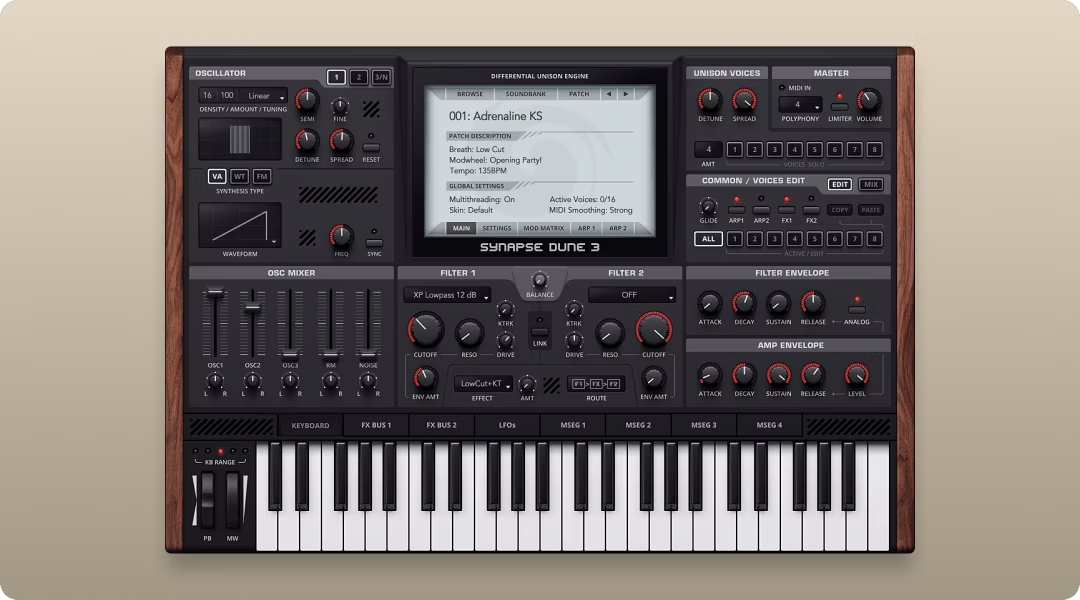
Dune 3 is the synth for producers who want wide, lush pads without crushing their CPU. The unison engine stacks voices for massive stereo spread. The wavetable capabilities let you create slowly shifting timbres.
The sound leans toward big and immersive, which suits ambient well. Pads fill the stereo field without effort. The filter drive adds warmth when you need it.
- Unison stacking: Layer voices for thick, immersive pads that fill the stereo field.
- CPU efficiency: Run multiple instances without bogging down your session.
- Wavetable oscillators: Morph between waveforms for evolving textures.
It's efficient enough to run multiple instances in a session without freezing tracks. The onboard FX handle basic shaping, though you'll likely want external reverb for serious spatial work.
Dexed FM synth
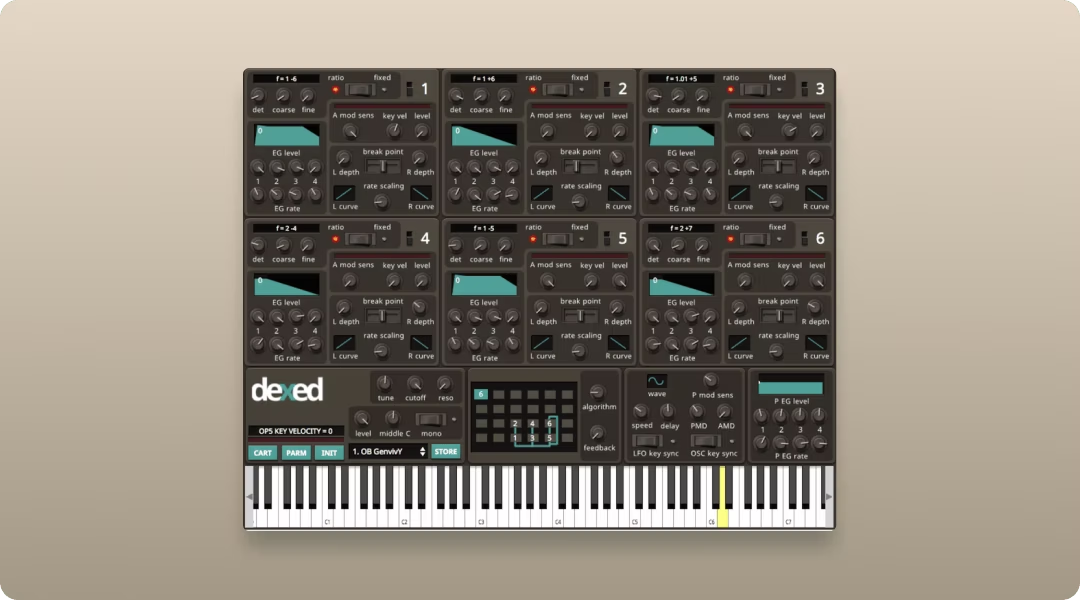
Dexed recreates the Yamaha DX7 in plugin form. For ambient, FM synthesis excels at glassy, bell-like, and crystalline textures that pair beautifully with long reverb tails. These harmonically rich tones shimmer in a mix without taking up much space.
The learning curve for FM synthesis is steeper than subtractive or wavetable approaches. But Dexed's compatibility with original DX7 patches means you can load thousands of existing sounds and tweak from there.
- Glassy harmonics: FM synthesis excels at airy, bell-like tones that shimmer in a mix.
- DX7 patch compatibility: Load classic patches or design your own using the operator and algorithm structure.
- Lightweight and free: Minimal CPU impact, no cost.
Add a long reverb and these timbres bloom into something expansive. Decades of sound design are available through existing patch libraries.
Output Signal hybrid instrument
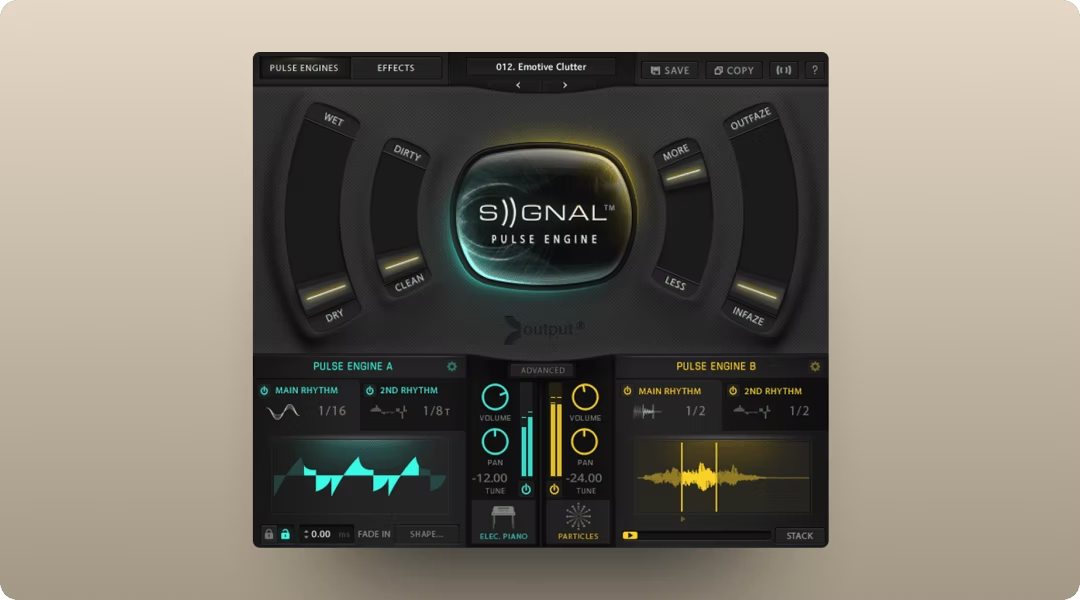
Signal blends fat analog synths with beautifully recorded live instruments. For ambient producers who want warmth and movement without purely synthetic timbres, Signal offers a hybrid approach that sits between synth and sample library.
The instrument runs in Kontakt or the free Kontakt Player. Load it on a Software Instrument track. Macro controls let you shape sounds quickly, and the texture and pulse engines blend sustained beds with rhythmic motion.
- Texture and pulse engines: Blend sustained beds with rhythmic motion for evolving soundscapes.
- Macro controls: Shape sounds quickly without diving into deep menus.
- Analog and acoustic blend: Get warmth from synth layers and organic character from live recordings.
Automate the macros for slow, cinematic shifts over time. For string-based ambient textures, Analog Strings offers a similar hybrid approach with cutting-edge string sounds. Signal is available in the Output FX + Instruments Bundle alongside other Kontakt instruments and FX plugins.
How to choose the right ambient synth for your workflow
Ambient production is sound-design-first. The best synth is the one that lets you explore texture without friction. Your choice depends on budget, CPU considerations, and how you prefer to work.
- Budget: Free options like Vital, Surge XT, and Dexed cover substantial ground. Paid tools like Omnisphere and Dune 3 add depth and convenience.
- CPU considerations: Lighter synths let you layer more instances. Heavier ones like Omnisphere may require freezing tracks in dense sessions.
- Workflow fit: Playable samplers like Arcade suit loop-first exploration. Deep synths like Vital or Omnisphere suit patch-design sessions where you build from scratch.
FX integration matters too. Some synths have robust onboard effects. Others benefit from external processing via tools like Portal for granular textures—where incoming audio is sliced into tiny grains that can be stretched, pitched, and layered to create slowly evolving soundscapes—or Movement for rhythmic modulation.
Output One gives you access to Arcade, Portal, Thermal, Movement, and Co-Producer in one subscription. If you're building a toolkit from scratch, it covers both sound sources and FX processing for ambient production.
FAQ
Can you make ambient music with free synth plugins?
Yes. Vital, Surge XT, and Dexed are all free and capable of producing professional ambient textures. The free tier of Vital alone covers most of what you need for evolving pads and complex modulation.
What makes a synth good for ambient versus other genres?
Ambient synths need strong modulation capabilities for slow, evolving sounds. Deep mod matrices, wavetable morphing, and built-in spatial effects matter more than fast envelopes or aggressive filters.
Should you use hardware or software synths for ambient production?
Software synths offer more flexibility for layering and automation in a DAW environment. Hardware can add character, but most ambient producers work primarily in software for practical reasons.
You’ve seen how Output Thermal, Arcade, Portal, Movement, and Co-Producer can shape evolving ambient textures—Output One includes all of them in one subscription, plus every FX expansion. Try the full toolkit together and move from idea to atmosphere faster.
Try it free